Set forth below is the text of a comment that was recently posted to the discussion thread for another blog entry at this site:
“We can cut back or eliminate altogether big price crashes by working harder as a society to warn investors of the dangers of irrational exuberance and by providing them the tools needed for them to see that it is in their interest to invest more rationally than has been the custom in the past.”
There have been asset price bubbles for hundreds of years ( see South Sea bubble, Tulip mania and probably many others that have been lost to history)
No amount of warnings will stop them.
We agree that there have been price bubbles since the first market opened for business, Evidence. We don’t agree that nothing can stop them. The difference is that today we have Shiller’s Nobel-prize-winning research to help us. Prior to 1981, we did not have that. It’s a big deal. There is a reason why Shiller was awarded a Nobel prize.
Your specific statement is that “no amount of warnings will stop them.” I am not sure that warnings alone would stop them. What I [propose is that we let investors know how much they have to gain by lowering their stock allocation when prices reach dangerous levels. Investors obviously want to act in their self-interest. If we show them that they can retire many years sooner by cutting back on stocks when the CAPE level rises to insanely high levels, I think we can change things. Stock prices become self-regulating in a world in which honest posting on Shiller’s research is permitted at every site. In that world, lots of experts will want to become involved in helping investors invest more effectively and lots of investors will want to learn how to invest more effectively.
There was a time when people said that there have always been slaves and there always will be slaves. Now there are no slaves.
There was a time when people said that we will never be able to persuade large numbers of people to give up smoking even though it causes cancer but the percentage of the population that smokes has dropped.
There was a time when people were afraid to speak up against Harvey Weinstein on grounds that he would never be held accountable but today he is being held accountable.
There was a time when people threw their trash on the ground thoughtlessly but today many people have become environmentally conscious.
Things change, Evidence. Sometimes it seems like they cannot but, if there is a change that we really, really must make, we always figure out a way to make it. Price crashes are devastating to millions of people. They cause retirements to fail. They cause businesses to fail. They cause millions of people to lose their jobs. They cause political frictions.
I think that, with Shiller’s research, we can end big price crashes. I think we will always have some ups and downs. But, if we open every site to honest posting on the last 38 years of peer-reviewed research in this field, I think that we can get to a situation where the CAPE level never again drops below 12 and never again rises above 20. That would be a huge advance from the world we live in today, where the CAPE level sometimes drops to 8 and sometimes rises to 44. I think we are on the verge of a huge economic advance.
There’s only one way to find out, you know? I think that every single person living in the United States would prefer to live in that better world. And we already have the research that gets us there. And we have already recognized that research with a Nobel prize. All that we need to do at this point is to give ourselves the permission to talk about it openly and honestly at every site on the internet. And we already have published site rules giving ourselves that permission.
Just because something has always been true in the past does not mean that it will always be true in the future. Not in this country. We are all about advances. It is these advances that generate the productivity gains that permit us to live so well. I think that we should embrace all of the advances that we can. I think that we should embrace this one.
I naturally wish you all the best that this life has to offer a person.
Rob

Have you started your job search?
I have not.
I am working on what I consider the eighth draft of the book. I count the collection of the material that I put in the 30 binders that used to be in my basement as Draft One. I count the exploration of the ideas on internet discussion boards that I participated in after I put forward my famous post of May 13, 2002, as Draft Two. I count the writing of full-length articles at this site (which forced me to organize and expand my thinking more than I did to write discussion-board posts) as Draft Three. I count the recording of the 200 one-hour podcasts that I recorded in 2009 (in the days following the initiation of the economic crisis) as Draft Four. I count my first stab at writing a full book (in which the ideas were not yet sufficiently developed for the book to possess a high level of clarity and flow) as Draft Five.
I count the 11,000 word article (“Buy-and-Hold Is Dangerous”) that I wrote near the end of last year to summarize all that I have learned in one complete and concise statement of the case as Draft Six. I wrote Draft Seven, which is largely organized but still somewhat scattered thoughts placed in chapters (the chapter titles are a lock at this point — just making final decisions on chapter titles is a big organizational advance) but without good enough narrative flow, earlier this year. I am now working on Draft Eight, which will have the proper narrative flow.
I am getting through roughly a chapter per week. I expect to finish that by Labor Day. Draft Nine is for fine-tuning. I want to give myself two months for that. Draft Nine is for proof-reading. I want to give myself a month for that (I had to read through my book on saving 40 times before I was able to get through the entire thing without making a single fix — that’s when I knew that it was ready [I only identified one missing comma after it was printed}). That would get me to December 1. Then I give myself a month of slack time to finish by the end of the year.
I expect that I will put out some feelers re a job when I have finished this draft and have only the fine-tuning and proofing drafts remaining. If I don’t immediately get a job, which is the likely scenario, then I will continue with the book-writing until it is complete. If I hear about a job that I don’t want to pass up, I will grab it but then the only work that will be remaining on the book will be fine-tuning and proofing. Those are tasks that don’t require a huge amount of mental energy, so I would have no concern that I wouldn’t be able to complete those tasks at the end of a full work day (I would be concerned that I would not be able to complete the work that I am doing today in an effective and timely way while also holding a full-time job). So I would be okay with accepting a job from September 1 forward.
If I haven’t found a job by the end of the year, then I would of course lower my standards a bit re what I would accept to bring myself more into line with what the job market is offering me at this stage of my life. Until the book is complete, my intent is to accept only a job that represents a very good fit. That’s the current plan, in any event. I like to have a plan. But I also try to adapt to changing circumstances. So none of this is written in stone.
My best wishes to you.
Book-Writing Rob
How many pages is this book? Sounds like it will be massive. What would be the ideal job?
I came close to applying for a job a few years ago at the Home School Legal Defense Fund. It did not pay a huge amount — $32,000. But there were lots of things that I liked about it. It required a legal degree — so I felt that it would be making use of my skill set. It sounded like it would be a 40-hour-per-week job. That’s my strong preference — I want to be sure to leave time for investing work. I believe in the cause — both of my boys were home-schooled and received good educations. And the job was only a few blocks away from my home. I don’t expect to be able to find something as appealing as that. But something like that would be perfect.
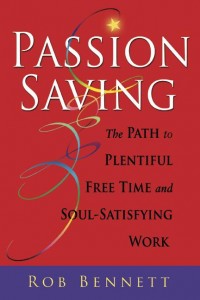
Keeping the book to a less-than-massive word count is going to be a hard job but it is important that I do so; attention spans are short today. My book on effective saving strategies was 84.000 words. I thought that was the perfect length for a serious book; I am not interested in putting in the effort to write a book that offers only a surface treatment of a subject. So it would be hard to go with a length of much less than that. But 84,000 words is not too much for a person with a genuine interest in learning about new ideas. So I consider that the ideal word count.
It does not appear to me that I have any chance of keeping the length of this one to 84,000 words. There are 14 chapters and, as of today, the average chapter length is about 10,000 words. A big part of the revision process is getting things tighter. So I certainly will be able to come in at less than 140,000 words. I presume that the final word count will be something between those two extremes, possibly 120,000 words.
That’s a very rough guess. I would certainly prefer a lower word count for marketing purposes. But I do not want to leave out examination of important parts of the story. I do not know that the story can be done justice without a word count of 120,000 words or at least something close to that.
Word-Counting Rob