I have posted Entry #446 to my weekly Valuation-Informed Indexing column at the Value Walk site. It’s called Robert Shiller’s Research Is the Best Response to the Growing Popularity of Socialism.
Juicy Excerpt: A pre-Shiller capitalism doesn’t get the job done. Millions of middle-class people are counting on the money in their retirement accounts to assure their financial futures. If half of that income is the product of a temporary irrational exuberance, those people are going to lose confidence in our economic system when they see years of saving effort laid to waste. A healthy capitalism does not permit the sort of price crashes that have become typical of our stock market in pre-Shiller years. Shiller is trying to help us build a better capitalism. As someone who is concerned about the growing popularity of socialism, I hope that we begin listening more carefully to what he is trying to tell us.

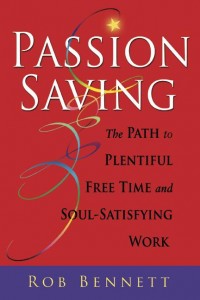
Do you think Shiller sits around all day wondering what is on Rob Bennett’s mind?
I do not.
But I believe that every single person in the United States would benefit if Shiller would address a lot of the questions that I have raised over the past 17 years about the implications of his Nobel-prize-winning research. I believe that Shiller could tell us things that we all need to hear and I want to do everything in my power to get us to a place where we all start hearing those things. His ideas are powerful and important. We are hurting ourselves by accepting a situation where we are not benefiting from them to the extent we could.
Say that someone had discovered the cure for cancer and that the people who profit from running cancer treatment centers engaged in criminal behavior to stop people from hearing about what this person had done. And that I said on the internet that we all should be doing what we could to get the message about how to cure cancer out to everyone. Would that person be thinking about what was on my mind every day? No. But it would still be a good thing if we could persuade that person to report the criminal behavior and thereby change the circumstances that applied so that he could get his message out.
I want to benefit from Shiller’s research. And I want you to benefit from Shiller’s research. And I want every person alive in the United States to benefit from Shiller’s research. I think it is a shame that there has been a cover-up. Had there never been a cover-up, the opposition to spreading the word about Shiller’s research would be far less than it is today. Each day that the cover-up continue makes things worse. So I would like the cover up to end today.
Does that help at all?
Rob
Your self importance is hugely inflated.
I’m just a guy who loves his country and who therefore believes that the laws of the United States should be applied to discussions of stock investing held on the internet to rein in the insanely abusive behavior of Buy-and-Holders who want to suppress discussion of the 38 years of peer-reviewed research showing that there is precisely zero chance that a pure Get Rich Quick “strategy” could ever work for even a single long-term investor.
Is the importance of the United States and of its laws “hugely inflated.?” I do not think so. I think we are a good people. I think that we will down the road a piece make a decision to enforce our laws against financial fraud. The reason why it hasn’t happened yet is that we have not yet paid the full price for the widespread promotion of Buy-and-Hold. We paid a big price in 2008. But prices recovered soon enough to persuade most people that they will be able to make it to the other side in reasonably good shape. I think that a 50 percent price crash may cause them to reconsider. That’s what happened with the Bernie Madoff matter. His investors called him “Saint Bernie” until they saw their life savings wiped out. Then they came up with other names for him. That’s what I think we will see with Buy-and-Hold, which is really just the Madoff fund blown up 500 times bigger.
We’ll see, you know? It’s not going to happen because of anything that I say about these matters. It is either going to happen because millions of middle-class investors become upset that they have lost most of their life savings or it is not going to happen. If millions become upset about what Buy-and-Hold has done to them, I will be around to tell the full story. That’s what journalists do. We tell the stories that people need to hear to make sense of their lives. I am going to do that to the best of my ability. It’s my job. I take pride on doing my job effectively.
I am very proud of the positive role that I have played for 17 years running now. So I do indeed think that I have done important things. But I don’t for two seconds deny the contributions of thousands of others who have done important things too. Shiller has obviously done important things. Bogle has obviously done important things. Russell has obviously done important things. Pfau has obviously done important things. You know what? You Goons have done important things on those occasions when you have asked sincere questions that have helped us all come to a better understanding of how stock investing works in the real world. So good for you Goons, you know? You are wrong if you think that you are the only ones capable of doing important things. But it is my sincere view that anyone who says that you have never done important things is wrong.
Anyway, I wish you all the best that this life has to offer a person, as always.
My best and warmest wishes to you and yours, dear Goon friend.
Important (But One of Many in This Regard) Rob
Allyou have is a story line that you created to fit your narrative. You have only convinced yourself.
I convinced Wade Pfau, Anonymous.
A) Academic Researcher Wade Pfau’s Statements Showing Interest In and Confidence in Rob Bennett’s Work
1) “I do cite you and John Walter Russell in my paper as the earliest and strongest advocates of this approach [New School safe-withdrawal-rate research].
2) “Are you aware of Shiller offering asset allocation advice based on PE10? …. If you read Rob Bennett’s stuff carefully, I think he did provide an important contribution in terms of describing a way for PE10 to guide asset allocation for long-term conservative investors. I also think he was right on the issue of safe withdrawal rates.” — Posted at the Bogleheads Forum discussion board.
3) “I am also extremely grateful to Rob Bennett for motivating this topic and contributing his experience and encouragement.” — Written in Acknowledgments section of Wade’s breakthrough research paper.
4)”You deserve much of the credit as the whole idea of Valuation-Informed Indexing belongs to you.”
5) “I definitely need to cite some of your work as the founder of Valuation-Informed Indexing, as I have not found anyone else who can lay claim to that. Shiller pointed out the predictive power of PE10 but never discussed how to incorporate it into asset allocation, as far as I know.”
B) Academic Researcher Wade Pfau’s Statements on the Superiority of Valuation-Informed Indexing Over Buy-and-Hold
1) “What you see in the top part of the graph for each year is the amount of wealth accumulated after 30 years for someone following Buy-and-Hold against someone following Valuation-Informed Indexing….Valuation-Informed Indexing provides more wealth for 102 of the 110 rolling 30-year periods, while Buy-and-Hold did better in 8 of the periods.”
2) “I will take steps in my final paper to test a wide variety of assumptions about asset allocation, valuation-based decision rules, whether the period is 10, 20, 30, or 40 years, lump-sum vs. dollar-cost averaging, and so on, and to show that the results are quite robust to changes in any of these assumptions.”
3) “Any data mining that I am doing is in favor of buy-and-hold, not in favor of market timing.”
4) “The findings for “market timing” are so robust anyway, that it hardly matters how we do it.”
5) “The maximum drawdown from market timing is much less. That is how far the portfolio drops from past highs to current lows. The Buy-and-Holder once experienced a 60.96% drop, whereas the worst drop for market timing was 24.16%.”
6) “Market timing provides signficantly higher returns at a comparable level of risk.”
7) “The market timer enjoys a far less risky strategy.”
8) “On a risk-adjusted basis, market-timing strategies provide comparable returns as a 100 percent stocks Buy-and-Hold strategy but with substantially less risk. Meanwhile, market timing provides comparable risks and the same average asset allocation as a 50/50 fixed allocation strategy, but with much higher returns.”
9) “If everyone increased exposure after a market fall and vice versa, then this would dampen out the big swings in the market aggregates, and we might get shallower boom/bust cycles.”
10) ““‘I’m excited about this, as depending on what you have already done, I think I can design a study using the Shiller data to provide historical simulations of Valuation-Informed Indexing strategies against fixed Buy-and-Hold strategies and also lifecycle strategies (declining allocation to stocks as one ages). If Valuation-Informed Indexing consistently outperforms fixed and lifecycle strategies, then the proof is in the pudding so to speak. Given how well valuations help to explain withdrawal rates, I think there is a lot of potential for this topic.”
11) “Yes, Virginia, Valuation-Informed Indexing Works!”
12) “It makes complete sense to have an equity allocation that is in some way flexible. Having a completely inelastic demand for equities is a bit bonkers; no-one acts that way with life’s other important commodities.”
13) “I wrote up the programs to test your Valuation-Informed Indexing strategies against Buy-and-Hold, and I must say that the results look very promising…. I am quite excited about the findings so far. As you say in the podcast, Valuation-Informed Indexing should beat Buy-and-Hold about 90 percent of the time, and I am getting results that support this for various strategies.”
14) “I have been toying with the idea of sending the paper to the Journal of Finance, which is the most prestigious journal in academic finance.”
15) “Now that I am accounting for risk, I am even more amazed by how well Valuation-Informed Indexing works.”
16) You shouldn’t be too excited with great wealth accumulations if they happened due to unusually high valuations, and low wealth accumulations shouldn’t be as scary if valuations are also quite low.”
17) “My idea is to show many different tables with results over the whole period for returns and risks. Valuation-Informed Indexing always provides more returns for often less risk.”
18) “No matter what I try, Valuation-Informed Indexing will still perform better in 85-95% of cases for 30 years.”
19) “I have a new figure for showing this as well. And a nice figure showing the outperformance percentages across rolling periods of lengths between 1 and 40 years. I think it is all quite persuasive.”
20) “You haven’t seen anything yet! This was just the secondary study. I’m still working on the main one!”
C) Academic Researcher Wade Pfau’s Statements of Incredulity That He Was the First Academic Researcher to Examine the Valuation-Informed Indexing Strategy
1) ” I know that there is an extensive literature about the predictability of long-term stock returns dating back to Campbell and Shiller’s work in the mid-1990s. I also know that there is an extensive literature about short-term market timing strategies…. But my question is about LONG-TERM market timing strategies. In other words, using market timing over periods of at least 10 years to obtain better returns than a Buy-and-Hold strategy. The literature seems slim.”
2) “Let me just explain a bit more why I posted about this here. Valuation-Informed Indexing has had critics for years, but until Norbert did it in 2008, nobody seemed to have provided a serious investigation of it. I just couldn’t understand why. And that bothered me.”
3) “Two papers by Fisher and Statman are still all I can find that provide evidence against long-term market timing.”
4) “I’m so confused by why Fisher and Statman didn’t consider risk in their idiot switching tests. Valuation-Informed Indexing is much less risky by pretty much any standard I consider. I must wonder… did I make a mistake somewhere? Why haven’t academics already published research about this?”
D) Academic Researcher Wade Pfau’s Statements on the Dangers of the Conventional Retirement Planning Advice
1) “The traditional approach to retirement planning (as described on pages 10 and 11 of The Bogleheads’ Guide to Retirement Planning, for example) is counterproductive and possibly damaging.”
2) “Retirees now frequently base their retirement decisions on the portfolio success rates found in research such as the Trinity study…. This is not the information that current and prospective retirees need for making their withdrawal rate decisions.”
3) “This article provides favorable evidence based on the historical record for long-term conservative investors to obtain improved retirement planning outcomes (lower savings rates, higher withdrawal rates) using valuation-based asset allocation strategies.”
4) Wade sent me a link to an article in Business Week that was published more than eight years after my post pointing out the errors in the Old School retirement studies and which he characterized as “quite sympathetic to the point you were trying to make all along”.
5) “Though I was only trying to do an Old School safe-withdrawal-rate study, all that I ended up doing was showing in a different way what you had been saying all along: the safe withdrawal rate changes with valuations.”
6) “Valuations are the driving factor. ”
7) “This is similar to your drunk driving analogy, which I agree with.” The discredited but uncorrected retirement studies find that in most circumstances a 4 percent withdrawal rate provides a huge cushion for the retiree using it. However, in each of the three cases in history when stocks reached insanely high price levels, retirements using a 4 percent withdrawal came within a whisker of failing. To say that this shows that a 4 percent withdrawal is “100 percent safe” (these words are used in the Greaney study) for a retirement beginning at a time of insanely high price levels is like saying that driving drunk is “100 percent safe” because 97 sober drivers drove their cars 20 miles without incident while 3 drunk drivers were paralyzed for life in car accidents but did not die. The fact that 4 percent only worked by a whisker in the cases in which valuations were high at the beginning of the retirement shows that a 4 percent withdrawal is high-risk at times of high valuations, not that it is “100 percent safe.”
8) ” Actually, this issue shouldn’t really even be all that controversial. It’s just common sense that the probabilities from the Trinity study shouldn’t be interpreted as forward-looking probabilities for new retirees.”
9) Naturally, I am finding that Valuation-Informed Indexing can allow you to reach a wealth target with a lower savings rate, use a higher withdrawal rate, and also have a lower “safe” savings rate, than a fixed allocation.
E) Academic Researcher Wade Pfau’s Statements Showing His Concerns that Continuing to Report Honestly on the Investing Realities in the Face of the “Hostile Environment” for Doing So Created by Buy-and-Holders Would Harm His Career
1) “I was trying to pay tribute to your accomplishments in what I knew would be a hostile environment.”
2) “Valuations and long-term investors is a somewhat controversial topic.” Wade posted these words to his blog in October 2011 as his explanation of why he was abandoning his plan of doing further research on the superiority of Valuation-Informed Indexing strategies over Buy-and-Hold strategies. He had told me in earlier days that “You ain’t see nothing yet!” when I praised his breakthrough research in this area. After his flip to the dark side, Wade removed the page containing this blog entry from his site.
3) “We have both read and met to discuss your paper. Unfortunately, we did not find the paper’s incremental contribution to the academic finance literature, assuming the analysis proved to be correct, rose to the level that we are seeking for papers in the JFR. Thus sending the paper to a reviewer would be inefficient.” These words are from an academic journal’s “desk reject” of Wade’s breakthrough research.
4) ) ““ I was discouraged when I first received the “desk reject” by the editors of the same journal that published the Fisher and Statman paper. I realized that I didn’t have a chance with one of the top journals.”
5) “I think I should stay publicly quiet for a while, as I really don’t want anyone sending messages about any topics to officials at my university.”
6) I don’t want them [the Goons] working behind the scenes to derail me.”
7) “I did warn the editor of the Journal of Financial Planning that they may receive some ‘hate mail‘ after I mentioned your name in the safe savings rate paper.”
Rob
And we all know what Wade days now. The mere fact he won’t even speak to you tells us all we need to know.
The fact that Wade won’t speak to me today definitely tells a tale that needs to be widely told, Anonymous.
I naturally wish you all good things.
Rob
Wade already told us why he avoids you.
He told me that he was afraid of you.
He told me that he feared that you would send defamatory e-mails to his employer and get him fired from his job if he continued doing honest work in this field. That’s extortion. It’s a crime.
Not this boy, Anonymous.
Please feel free to ask for any help that I can give you that is on the right side of the felony line. I will be on it in three seconds and you won’t have to ask a second time.
Please don’t even ask re anything on the wrong side of the felony line. It ain’t gonna happen. Not in 17 years. Not in 17 billion years.
I hope that that helps at least a tiny bit.
My best and warmest wishes to you and yours.
Felony-Free Rob
He did not say that. In fact, he refuted it.
I have a funny feeling that Wade will be called to testify re these matters in the days following the next price crash.
Are you okay with letting a jury of your peers settle the matter?
Believer-in-the-System Rob
I have a funny feeling that you have made up the whole thing about a jury and prison.
Are you okay with us living in the world of reality instead of make believe?
We’re just going to have to wait to see how it all plays out, Anonymous.
I do wish you all good things in the interim.
Rob
We have seen it all play out Rob. You seem to finally recognize this based on your most recent posts indicating that you intend to go back to work.
I believe that we will see a higher percentage of the population work up the courage to stand up to you Goons after we have seen a 50 percent drop in stock prices. There has never since the morning of May 13, 2002, been a day when stock prices went to fair-value levels or lower (except for a very brief moment in early 2009 when they went just a tiny bit below fair value). So we have never had a time when the irrational exuberance encouraged by Buy-and-Hold was not messing with people’s minds. I want to see how people respond to hearing what the peer-reviewed research says at a time when stock prices are at fair-value levels or lower.
About 10 percent of the population today believes that Shiller’s research is legitimate and important. How high does that percentage have to go for us to open every discussion board and blog on the internet to honest posting? My guess is that the answer is: “20 percent.” And my further guess is that the next price crash will get us there.
But we are just going to have to wait to see how it all plays out to know for certain.
My best wishes.
Rob
How many people embraced your position after the 2009 drop? Buy and holders were rewarded. Market timers, like you, have not done well. Enough said.
There was significant movement in the direction of Valuation-Informed Indexing at the Bogleheads Forum in the wake of the September 2008 drop in stock prices. However, they movement was not able to achieve much momentum before prices shot back up in 2009.
The peer-reviewed research that I co-authored with Wade Pfau showed that Valuation-Informed Indexing has been providing far superior results to Buy-and-Hold for the entire time-period for which we have good records of stock prices available to us. It is not even a remotely close call. Buy-and-Hold can appear to be doing well during times of wildly inflated prices. But those prices never last. Those prices are the product of irrational exuberance, an emotional phenomenon. Only the prices that reflect economic realities are of lasting significance.
If you believed that it were possible to make a research-based case for Buy-and-Hold, you never would have sought a single board banning. If you thought that civil discussions could work to the benefit of Buy-and-Hold, you would welcome them. Your behavior shows that even the most intense Buy-and-Hold supporters lack confidence in their ability to make a reasoned case for the strategy. Buy-and-Hold is a marketing gimmick. It works so long as prices remain high. There is no reason to believe that it would continue to possess widespread appeal after prices fell to fair-value levels or lower.
Rob
You have never been part of the Bogleheads forum and there was no movement towards you. Secondly, you never co-authored a paper with Wade. Third, your banning at a large number of boards was based on your bad behavior.
It will be interesting to see how it all plays out, Anonymous.
I naturally wish you all the best that this life has to offer a person.
Bad Behaving Rob
See above. It has already played out. Time for you to go get that job.
Okay, Anonymous.
Take care, my dear friend.
Job-Seeking Rob
I intend to seek corporate employment at the end of the year, when I have finished my book.
But it is not going to make much of a difference.
I will still be writing my weekly column. I will still be checking the blog each night to see if there have been comments and to respond to them. I won’t be able to response immediately, that’s a small difference. But is that such a biggie? I sure don’t see how.
I am still going to be doing the honest-posting thing. So how are you Goons better off?
It all comes down to how millions of middle-class Americans react when they lose 50 percent or more of their life savings. Do they at that time applaud Buy-and-Hold or do they turn on it? I think they are going to turn on it. But I thought that Greaney’s Campaign of Terror against the hundreds of people who wanted to see honest posting permitted at the Motley Fool board was going to be brought to an end within 48 hours, 72 hours at the tops. The joke was obviously on me re that one. It is at least a theoretical possibility that the millions of people who lose more than half of their life savings in the next price crash will applaud the Wall Street Con Men and you Goons for what they and you have done to them. We are just going to have to wait and see how it all plays out to know for certain.
I didn’t call Greaney out on his b.s. for three years. I knew that his retirement study didn’t contain a valuations adjustment the first time that I looked at it. It was the first thing that I looked for when I discovered his web site. So my hands are not 100 percent clean re this matter. I have goonish tendencies working inside me too. We all do. I was a proud Buy-and-Holder myself once upon a time. I was in the company of millions of good and smart people. So sue me, you know?
If we are ever going to move beyond Buy-and-Hold to something real, we are going to have to open every site on the interest to honest posting re the last 38 years of peer-reviewed research in this field. There is no other way. We cannot think about something until we give ourselves permission to talk about that something. And Shiller’s Nobel-prize-winning research findings are something that we very, very, very much need to be thinking about. So we are going to have to as a nation work up the courage to stand up to you Goons and have the laws against financial fraud enforced at every discussion board and blog on the internet. That’s my sincere assessment after 17 years of this — er — stuff.
I wish you all the best, okay? I think of you as a friend, your goonishness aside. I would like to think that that counts for a little something, whether you are open to saying so or not.
My best wishes to you, dear Goon FRIEND.
Honest-Investment-Discussion-Seeking Rob
“I am still going to be doing the honest-posting thing. So how are you Goons better off?”
We are already just fine. We post honestly instead of trying to convince people about being perceived as honest (when you are not). We don’t need to seek revenge and call people names like you do. We decided long ago to keep working and saving so that we don’t have to struggle in retirement. I can’t imagine having to go back to work st your age after being out of the market for so long.
Okay, Anonymous.
I do wish you all good things, in any event.
Hang in there, my good friend.
In-a-Bad-Spot Rob
Note that I, nor others that comment on this board call you names , like “goon”. Notice that we don’t make threats, like prison. Notice that we behave ourselves and are mindful of community standards, keeping us from banning.
Learning anything?
Greaney has not corrected his retirement study. I pointed out the error in it on the morning of May 13, 2002. I noted that it does not contain an adjustment for the valuation level that applies on the day the retirement begins. Thousands of people have looked at the study over the course of the past 17 years and not one has been able to identify a valuation adjustment in it. So I was right re what I said.
Greaney said that the safe withdrawal rate was 4 percent. If you include a valuation adjustment, you learn that the safe withdrawal rate for those who retired in January 2000 was 1.6 percent. Greaney said that those taking a 4 percent withdrawal had “100 percent safe” retirements. The properly done studies show that the odds of those retirements lasting 30 years is only 30 percent. So they were not safe or anything even remotely close to it.
I am not willing to lie re these matters. A failed retirement is a serious life setback. So, when I am on a discussion board and someone asks “what is the safe withdrawal rate?” I post honestly. I do not say that it is always the same number, 4 percent. I say what it is for retirements beginning with the valuation level that applies at that time. That’s the dispute. That’s what you refer to as my “bad behavior.” That’s always been the dispute. I say that the Buy-and-Hold retirement studies should be corrected. You don’t want to see them corrected. That’s why we are working at cross purposes.
I could live with it if you told people that Buy-and-Holders believe that the safe withdrawal rate is always 4 percent but also let them know that those who believe in Nobel-prize-winning Economist Robert Shiller’s research showing that valuations affect long-term returns get a very different number (1.6 in January 2000, other numbers at other times). But I am not going to lie re this critically important matter. I believe that valuations affect long-term returns. If I say that I believe that the safe withdrawal rate is always the same number, I am obviously telling a lie. It’s not going to happen.
I have not threatened you with prison. I have no power to put you in prison and I have no desire to seek such power. I have pointed out that you have committed crimes that will likely get you sent to prison in the days following the next price crash. It is the U.S. statute books that threaten you with prison. Take it up with them.
By pointing out that you have committed crimes that will likely get you sent to prison, I am being a friend to you. The easy thing to do here would be to ignore the criminal acts and then act surprised when you are taken away. It won’t do you any good for me to warn you about prison when it is too late for you to help the millions of people whose retirements in danger. You can help those millions of people by doing what you can to open ever discussion board and blog on the internet to honest posting re the last 38 years of peer-reviewed research. Do that and people will be less angry in the end. Which will translate into a shorter prison term for you.
I am doing for you what I would want you to do for me if the tables were turned. I am your friend, whether you choose to acknowledge it or not. I have always been your friend. I was Greaney’s friend when I pointed out the error that he made in his study. If I had made an error in a retirement study, I would be horrified. I would want people to point it out so that I could correct it before it did more harm. Greaney is off his rocker if he thinks that I was somehow being something other than his friend by pointing out the error. I am his best friend in this world. Those who fail to urge him to correct his study are being cruel. He applauds them for it. But they are being cruel all the same. They are being cruel because that is the easier path to take in the short term but one that does great harm to him in the long run.
I am Greaney’s friend and your friend for the long term. I say as a friend that you should urge him to correct the study. Or, if not that, to at the very bare minimum urge him to come clean by acknowledging that there are two schools of academic thought as to how stock investing works and that those who follow the research of Robert Shiller (Valuation-Informed Indexers) get very different numbers than the number that Greaney reports in his study.
If there is ever anything that I can do to help you, please let me know.
If you want me to turn on my friend John Greaney by pretending that I see a valuation adjustment in his study, please try to find somebody else. No freakin’ way, no freakin’ how. I would be hurting him by doing that and of course I would be hurting all of the readers of his study as well. No can do.
My best wishes to you and yours, Anonymous.
Rob
Wade already discussed as to how you were wrong on the Greaney issue. You even stated how you were wrong and apologized. Since that time, you have been attempting to rewrite history. Sorry, but the history is out there for all to see.
It will be interesting to see how it all plays out, Anonymous.
I do wish you all good things, in any event.
History Rewriting Rob
“It will be interesting to see how it all plays out, Anonymous.”
See above. It has all played out. Time for you to get that job. At your age and lack of recent experience, you can’t be that picky. Take what you can get. Let us know where you land and I will try to throw a few extra bucks in your tip jar.
Okay.
Please take good care, my dear friend.
Tip-Jar-Holding Rob
The tip-jar thing is quintessential Goon stuff. It’s a celebration of the fact that you have been able to deny me an income for my fine work for 17 years with your ruthlessly, criminally abusive posting.
I see things from just the opposite perspective. I believe that someone who challenges your thinking on an important subject is doing you a favor. It’s possible that the person will convince you, in which case they have improved your life in a big way. And it is possible that the person will not convince you, in which case you are certainly not worse off and in reality are at least a bit better off because your conviction in your belief is strengthened by your having seen it survive the challenge. So all good stuff and no possible bad stuff.
You obviously don’t see it that way. Your reactions are DEFENSIVE. Defensiveness is not a rational response. Defensiveness is an emotional response. The insane amount of defensiveness that we have seen from Buy-and-Holders over the past 17 years tells me that Shiller is right. It’s very strong evidence. It is my view that people should be talking about that defensiveness on every investing site on the internet. We all need to know whether it is Shiller or Fama who is right and the defensiveness that we have seen makes a compelling case that it is Shiller. The frustrating paradox, of course, is that you almost have to believe that Shiller is right to even consider that sort of evidence. If you are a Buy-and-Holder you believe that investment decisions are 100 percent rational. So how could there be any defensiveness?
Each defensive post makes me more confident of my position and more confident in my belief that it will ultimately prevail. The stuff that persuades me a bit is when my Buy-and-Hold friends engage in rational and civil debate. That always at least impresses me and creates a desire within me to look at things anew and to do my best to give the Buy-and-Hold position as much credit as I possibly can. The abusive stuff is a huge turn off and assures me that it was a good thing that I finally worked up the courage (after three years of living in fear!) to advance that famous post of the morning of May 13, 2002.
The Ban on Honest Posting is consistent with the core principle of Buy-and-Hold. If investors are 100 percent rational, a Ban on Honest Posting is not even possible. So why worry that there is one in place? But the Ban on Honest Posting is not consistent with the laws of the United States. We protect people from fraud because we know that the humans have weaknesses that cause some of them to practice fraud and that cause others to fall for the fraudulent claims and that cause still many others to tolerate both the practicing of fraud and the falling for it without speaking out.
So the bottom line here is whether or not a 50 percent price crash will be a sufficient shock to prompt another 10 percent of the population to speak up about the ban which has been keeping us all in ignorance for so many years since Shiller published his “revolutionary” (his word) research showing us how stock investing works in the real world. We cannot get over the ignorance until we acknowledge that we humans are capable of preferring ignorance so long as it makes the numbers on our portfolio statements bigger than they should be and we cannot acknowledge that for so long as we remain in ignorance. So we are trapped by a Catch-22. But a 50 percent price crash might be painful enough to shock us out of it and cause us to appreciate the wonderful gift that Shiller bestowed on us when he published research showing us how to make such price crashes a thing of the past.
It all comes down to whether I believer that this is a good country or not. I believe that this is a good country, I believe that we are a good people. Not a perfect people, obviously. But a good people. If we were not a good people, Shiller’s book would never have found a publisher and would not have become a best-seller. If we were not a good people, Shiller would not have been awarded a Nobel prize. If we were not a good people, Wade Pfau would not have devoted 16 months of his life to preparing research with me showing that Valuation-Informed Indexing has been far superior to Buy-and-Hold for the entire time-period for which we have good records of stock prices. We are a good people who have been held back for 17 years (or for 38 years, if you count back to 1981) by a Catch 22 that has made fools (and, in the case of you Goons, criminals) of us.
I believe in us! I believe in research! I believe in the published rules of all the sites! I believe in learning! I believe that investors are humans and that humans possess emotions!
But we’ll see, you know? I certainly never thought that it would take 17 years for us to make our way to the other side of The Big Black Mountain. I thought that it would take perhaps 17 hours. So I have something less than a perfect track record when it comes to this stuff. Reader be warned!
My best and warmest wishes to you, Anonymous.
Life-Affirming Rob (All You Need Is Love, Man)