Set forth below is the text of an e-mail that I sent on December 18, 2008, to an editor at Money magazine in response to a recent article. I have not received a response.
Pat:
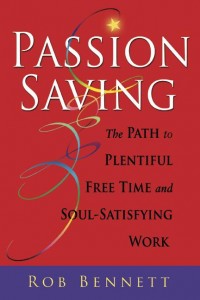
My name is Rob Bennett. I am the publisher of the www.PassionSaving.com web site and the founder of the Retire Early discussion-board community. I have also been a long-time contributor to a number of indexing discussion boards at which the issues raised in your article “Is It All Over for Stocks?”
http://money.cnn.com/2008/12/17/pf/end_of_stocks.moneymag/index.htm
have been discussed for close to seven years now as part of a series of discussions referred to as “The Great Safe Withdrawal Rate Debate.” We have learned amazing things during these discussions.
You hit on exactly the right point in the early paragraphs of your article. When you quote the man who asked “Just how bad would things have to get before you guys changed your advice?” you get right to the core. That’s it. The reality is that the conventional investing advice of the past 30 years is horrible advice. It was obviously well-intentioned and it was obviously developed by smart people doing their best to come up with sound advice. It is also obviously so that this advice is wrong-headed in a fundamental sense. We need to change what we say about investing. We need to begin giving better advice. We need a national debate to get us there. Money magazine obviously could be of huge help in getting us to where we need to be.
The dominant model today is Passive Investing. This model argues that there is no need for investors to time the market; in fact, it argues strongly that timing is a bad idea. The reality is that timing is essential. Without timing. long term investors cannot succeed in their efforts to reach their financial goals.
The error was in failing to distinguish short-term timing and long-term timing. There is indeed much evidence that short-term timing does not work; the advice to avoid short-term timing is good advice. The terrible error was the rush to the conclusion that long-term timing also is a bad idea. Long-term timing is changing your stock allocation to protect your portfolio at times when stock prices rise to insanely dangerous levels. Long-term timing is ESSENTIAL for the long-term investor.
I have a calculator at my web site called “The Stock-Return Predictor.”
http://www.passionsaving.com/stock-valuation.html
The calculator uses the historical stock-return data to reveal to investors the range of possible 10-year returns on stocks and the probabilities of various outcomes. If you plug in the P/E10 level that applied in January 2000 (“44”), you will see that the most likely 10-year annualized return for stocks purchased at that time was a negative 1 percent real. In contrast, Treasury Inflation-Protected Securities (TIPS) were paying a 4 percent real return with a government guarantee attached. There is no sane argument that can be made that a negative 1 percent is a better long-term return than a positive 4 percent. Yet the vast majority of investing “experts” was urging investors to invest heavily in stocks. This is the horror of Passive Investing.
The purported goal of Passive Investing is to “Stay the Course.” The problem is that Passive Investing advocates urge investors to stick to the same stock allocation at all valuation levels and this means taking on wildly different risk profiles at different times — that’s not staying the course, that’s permitting your plan to be sent wildly off course for no good reason. Investors need to be told how to Stay the Course in a meaningful way. They need to be told when changes in their stock allocations are needed to keep their risk profiles roughly constant.
I call this new strategy “Valuation-Informed Indexing.” There are numerous articles about it at my web site.:
http://www.passionsaving.com/Index-Investing-and-valuations.html
I’ve also recently recorded numerous podcasts exploring the need for a transition from the Passive Investing model to a new model that calls for changes in allocation in response to dramatic price swings (I call the new model “Rational Investing”):
http://www.passionsaving.com/personal-finance-podcasts.html
The change (including consideration of valuations in one’s allocation decision-making process) is a profound one. It changes every aspect of the investing project. The difference is that investors who understand that valuations affect long-term results see a market that always performs in accord with how their model says it should perform while Passive Investors see a market that never (except for short time periods, like the time from 1995 through 2000) performs in accord with how their model says it should perform. The key to successful long-term investing is confidence. Those who keep their risk profile roughly constant gain confidence over time. Those who fail to do so inevitably find themselves in circumstances in which their confidence falters because the message being delivered by the real world is not in accord with what their model leads them to expect.
I believe that we need to make a shift from Passive Investing to a model that urges that investors always take valuations into account. I believe that this is the only way to restore investor confidence in the stock market. It has not been possible to get an airing of these ideas for so long as prices remained at insanely dangerous levels. Now that prices have returned to reasonable levels, I am seeing signs that it might be possible to get a national debate initiated.
If you have an interest in these ideas, please ask any questions and let me know what you view as the strong and weak points. I would thrill me to see Money magazine set off the spark that gets this much-needed national debate on how investing really works in the real world started. I am a journalist speaking to a fellow journalist. I hope that you will not think it arrogant of me to let you know that I believe that you grabbed a tiger by the tail with the questions you brought to the table in your article. I have studied these matters in great depth on a daily basis for close to seven years now and have discovered things that I would have thought impossible in the days before I became involved in all this. I hope we will be able to work together to bring these ideas to the attention of a much larger readership than has been exposed to them thus far.
Thanks for listening. Congratulations on the writing of one of those truly important articles that we only get the opportunity to craft one or two times in the course of a lifetime. There is a chance here for the entire community of investors to take an extremely dark set of circumstances and turn it into something that will do a lot of good for a lot of people in the long run. These are absurdly bold claims. I wouldn’t put them forward if I were not confident that I could back them up and ultimately persuade you of their merit.
Rob

feed twitter twitter facebook