Set forth below is the text of a comment that I recently posted to the discussion thread for another blog entry at this site:
| It was one guy, saying something on one amateur blog, decades ago. No one but you even remembers. No one but you has decided to make it a life’s quest to somehow un-ring another person’s bell. You’ve literally squandered your life, you treasure, your wife, and all opportunities you could have taken from the day you decided to go loco over that one omission (in YOUR eyes) on someone else’s speculative work. One blog among thousands. What is the best case scenario for you going forward, in your own estimation? How will you get there? (And, is your plan practicable, or just a personal internal, flight of fancy?)
“God, give me the grace to change the things that are within my control, the courage to accept those that are not, and the wisdom to know the difference.” Get well soon, Rob. Greaney wasn’t the only person who advanced the 4 percent rule, Hopeful. There were thousands of newspaper articles on retirement planning that cited that rule. There were millions of retirements constructed with that rule in mind. It’s been 20 years since I pointed out the error and it hasn’t been corrected to this day. How could something like that happen? It happened because there are millions of people who are counting on the full amount in their stock portfolio to finance their retirement. They should be adjusting the amount listed on their portfolio statement for the amount of irrational exuberance present in the stock market at the moment they are checking. People aren’t going to do that unless they are told why it is so important that it be done. Lots of people are willing to warn them. But they are not going to do it until they feel safe to do so. We need to open every discussion board and blog to honest posting re the last 41 years of peer-reviewed research. That’s my sincere take, in any event. My best wishes to you and yours. Rob |

All we have to do is look at outcomes to know who was right. You are broke and divorced. Not good.
Would you say thzt about the people who invested in the Madoff fund? They obtained what appeared to be good outcomes for a time.
I think you need to be willing to look at the peer-reviewed research. Research can help you distinguish what’s short-term and fake from what’s real and long-lasting. The risk of stock investing is that the short-term, fake stuff can come to have a great pull on the emotional humans. The primary job of the investment expert is to help the emotional human investor to see through the irrational exuberance stuff.
My sncere take.
Rob
Again, you are making my point. People that follow faulty investment schemes go broke.
And it’s the peer-reviewed research that is the best guide to what is faulty and what is noit. If Buy-and-Hold were a real thing, not one Buy-and-Holder would have any objection to widespread discussion of the last 41 years of peer-reviewed research. The idea that market timing/price discipline might not always be 100 percent required was a mistake. We need to as a nation of people get about the business of making people aware that it is a mistake and of repairing the great damage that has been done by this mistake.
That’s my sincere take, Anonymous.
I wish you all good things.
Rob
Your ex wife is a saint for putting up with you for as long as she did. What do the kids think of you?
Your interpretation of the research resulted in you going broke. I don’t think anyone is interested in that kind of outcome. You have the same outcome as the Madoff investors.
Your ex wife is a saint for putting up with you for as long as she did. What do the kids think of you?
My ex-wife is a saint. That’s so. I have a good relationship with both of the boys. Neither of the boys has even once taken sides re their two parents. I think that’s awesome of them.
Rob
“ And it’s the peer-reviewed research that is the best guide to what is faulty and what is noit.”
The research says to not go broke with your strategy. You did. You didn’t follow the real research.
Your interpretation of the research resulted in you going broke. I don’t think anyone is interested in that kind of outcome. You have the same outcome as the Madoff investors.
Someone had to stand up to you Goons if as a nation of people we were ever going to make the transition from Buy-and-Hold to Valuation-Informed Indexing. I didn’t ask for the job. I think it would be fair to say that I was selected for it (by the Fates, God, Evolution, the Universe, whatever you want to call it). I think I have done a very good job under very difficult circumstances.
Rob
The research says to not go broke with your strategy. You did. You didn’t follow the real research.
The research says not to go outside the bounds of U.S. law when making the case for your strategy in discussions held on the internet. When you feel a need to go outside the bounds of U.S law, that’s a serious tell that the strategy is no longer worth defending.
My sincere take.
Rob
What you are doing isn’t a job and no one asked you to live out this fantasy.
Instead, you are merely a burden to those that have had to support you, including housing.
I think that the work that I am doing is the most important work being done today in the United States and I believe that I will be compensated accordingly in the days following the next Buy-and-Hold Crisis. Over and over again we have seen people who are viewed as experts in this field make efforts to let their readers and clients know that market timing/price discipline is absolutely essentual but hold back from speaking in clear terms for fear of what the Buy-and-Hold Goon Squads would do to them if they gave voice to simple and obvious research-backed truths. The best exanple is probably William Bernstein, who explained in his book that the conventional safe withdrawal rate studies were off by a full two percentage points at the top of the bubble but then kept it zipped while the discussions about whether honest posting should be permitted raged at the Bogleheads Forum. There is huge levelage in opening every board and blog to honest posting. We are going to be hearing amazing stuff from thousands and thousands of good and smart people in the days following the next Buy-and-Hold Crisis. I think we well could be looking at the biggest surge of economic growth in our nation’s history (after a horrifying Buy-and-Hold Crisis, to be sure).
Rob
“ I think that the work that I am doing is the most important work being done today in the United States and I believe that I will be compensated accordingly in the days following the next Buy-and-Hold Crisis.”
There are millions of people that think they will win the lottery this weekend and that they will never have to worry about money ever again. Their odds of winning are less than getting struck by lightning. Your odds of getting a windfall are even less than the lottery players. You can continue to live out your fantasy, but don’t expect everyone else to play along. You ex-wife sure didn’t buy it. You have spent the last 2 decades telling everyone to “see how it all plays out”. Well, we waited and it turned out to be a disaster for you, just like we all predicted.
It’s not a windfall if it turns out that I was right in what I said in my famous post from the morning of May 13, 2002, that the retirement study posted at John Greaney’s web site lacks an adjustment for the valuation level that applies on the day the retirement begins. People use retirement studies to plan retirements. When a retirement study gets the numbers wildly wrong, it needs to be promptly corrected or else lots of people will be hurt in very serious ways.
What does it say about this field of human endeavor that the error in the Greaney retirement study has not been corrected in 20 years? It says that the investment adviced field is today corrupt in a fundamental and pervasive way. If you can’t get the numbers in studies that people use to plan their retirements right, what the heck can you do? That’s basic. The people who work in the field are not generally corrupt. We have seen over and over again that most of the people who work in this field want to do honest work, they want to help people just as do most people who work in all other fields of human endeavor. But it is not reasonable to expect people to be willing to experience death threats aimed at their loved ones as the price to be paid for citing what the last 41 years of peer-reviewed research teaches us all about how stock investing works in the real world. So it is an important piece of business to get every site opened to honest posting re the last 41 years of peer-reviewed research.
I think the American people are going to pull it off. I think you Goons are going down. But we’ll see, you know. I am not God. I could be wrong. It has been known to happen.
In naturally wish you all the best that this life has to offer a person regardless of what investment atrategy you elect to follow, in any event.
Rob
So now you want to argue the word “windfall”? Who cares what you call it. We can call it a fantasy payment or whatever label you want to give it. It doesn’t matter. It is all made up, just like the rest of your story. There is nothing behind your silly claims.
Okay, Anonymous.
I do wish you all good things, in any event.
Rob
So who is financially supporting you now?
Over the past 20 years you have shown a lot more interest in my personal financial status than in getting the error in the Greaney retirement study corrected. I wonder why.
Rob
If your wife really believed your story, she would no have divorced you as she would have been convinced you had a big windfall coming.
There is no one that agrees with your statement about Greaney making an error. Obviously, you don’t talk about that, nor do you care. You just use it as a false narrative.
If your wife really believed your story, she would no have divorced you as she would have been convinced you had a big windfall coming.
I don’t think that she believes that I am going to receive a huge settlement payment.
That general way of thinking about things is widespread. I say that I am going to receive a settlement payment in the hundreds of millions. Wade Pfau believed in Valuation-Informed Indexing. He devoted 16 months of his life to researching my ideas in great depth and concluded that: “Yes, Virginia, Valuation-Informed Indexing works!” But, when you Goons threatened to destroy his career, he flipped. Why not just hang in there and obtain a huge settlement in the days following the next Buy-and-Hold Crisis?
It’s because our brains perceive what we can see as being what is real. Wade feels more comfortable receiving whatever salary he is being paid in the present to obtaining a $500 million settlement payment at some unknown time in the future. That’s how my ex felt about it. Full truth be told, that’s how pretty much everyone feels about it.
Buy-and-Hold says that the dollar amount of your portfolio value reported on your statement is your real portfolio value. That makes sense, doesn’t it? One of my favorite comments that you Goons ever advanced was when one of you asked “if you cash in your holdings, how much will they pay you?” The answer is they will pay you the full amount reported on your statement. You would think that the people at the mutual fund companies wouldn’t want to pay you more than your portfolio is really worth. But they do. They do it every day. Haven’t they read Shiller? If they have, it appears that they did not pay very close attention to what they were reading.
Shiller revolutionized the field. His findings change our understanding of how stock investing works in a fundamental way. It’s hard for most people to get their heads around how big an advance in our understanding we have achieved. The number on the portfolio statement is not accurate. That’s what this comes to. That number is not accurate and you cannot use that amount in your retirement planning. You have to adjust that amount for the effect of irrational exuberance.
Irrational exuberance gains are pretend gains. They are not real. They are not lasting, So you should not count them for retirement planning purposes. But they SEEM real. I’m not calling people dumb for falling for the irrational exuberance con. I fell for it. When I put forward my famous post of May 13, 2002, I was still a Buy-and-Holder. I didn’t believe in the 4 percent rule. But I still believed in Buy-and-Hold. It wasn’t until I saw 200 Buy-and-Holders endorse Greaney’s death threat that I saw that the whole thing is a crock. I didn’t fail to see it because I was dumb. I failed to see it because it is somewhat counter-intuitive to not count the number on the portfolio statement as real. You have to think about this stuff a bit before it all clicks.
This is why I say that we need to permit discussions of the last 41 years of research at every site. The more we talk about this stuff, the better we will come to understand it.
My ex believes that I am on to something important. She told me that. But she has experienced the same difficulties coming to a full understanding of all this as have lots of others. It’s a fact that lots of good and smart people do not fully understand it today. Today’s CAPE value tells us that. But they COULD understand it. They need to be able to enter discussions and ask questions and all that sort of thing. In time, it will all click. The advance from Buy-and-Holfd to Valuation-Informed Indexing is a huge advance, That’s why Shiller was awarded a Nobel prize for his amazing research.
Rob
There is no one that agrees with your statement about Greaney making an error. Obviously, you don’t talk about that, nor do you care. You just use it as a false narrative.
Evidence agrees. Evidence said in his famous post from late 2021 that “nobody” truly believes that Greaney included a valuation adjustment in his retirement study,”including Greaney himself.” That one nailed it.
Rob
“ Evidence agrees”
When did Evidence say that? He never did. He said that there was never an adjustment because it never needed one. He has never said that there was an error.
“ It’s because our brains perceive what we can see as being what is real. Wade feels more comfortable receiving whatever salary he is being paid in the present to obtaining a $500 million settlement payment at some unknown time in the future. That’s how my ex felt about it. Full truth be told, that’s how pretty much everyone feels about it.”
In short, no one but you thinks you have a windfall coming. The mere fact you can’t get an attorney to take your case also tells you that is it pure fantasy.
When did Evidence say that? He never did. He said that there was never an adjustment because it never needed one. He has never said that there was an error.
He said that the Greaney retirement study lacks a valuation adjustment. That’s an error. Shiller’s Nobel-prize-winning research shows that valuations affect long-term returns.
You are correct that he also said that there was no error. So I asked him whether he believed that Shiller’s Nobel-prize-winning research is legitimate research. He did not respond to that question.
I believe that Shiller’s Nobel-prize-winning research is legitimate research. So I believe that the Greaney study is in error. I believe that Greaney should have corrected the error within 24 hours of the moment that the error was brought to his attention. That was on the morning of May 13, 2002. I was the one who put up the post pointing out the error.
Rob
“ It’s because our brains perceive what we can see as being what is real. Wade feels more comfortable receiving whatever salary he is being paid in the present to obtaining a $500 million settlement payment at some unknown time in the future. That’s how my ex felt about it. Full truth be told, that’s how pretty much everyone feels about it.”
In short, no one but you thinks you have a windfall coming. The mere fact you can’t get an attorney to take your case also tells you that is it pure fantasy.
Is Shiller’s Nobel-prize-winning research showing that valuations affect long-term returns pure fantasy?
The fact that I have not been able to find an attorney to take the case shows how important this matter is to millions and millions of people. We all need access to honest reports on what the peer-reviewed research teaches us about how stock investing works in the real world and we need attorneys to protect us when internet goons tried to block us from getting the message out. Which is of course precisely the reason why I expect to receive a settlement payment of $500 million (not a windfall — I have earned every penny with the work I have done over the past 20 years).
In an earlier comment, you acknowledged that Evidence has said that the Greaney retirement study lacks a valuation adjustment and yet there is no error in it that needs to be corrected. When I have successed in opening every site on the internet to honest posting re the past 41 years of peer-reviewed research, there will not be one person saying that. That means that we will be seeing accurate and honest and research-based retirement studies at every site on the internet. Are you suggesting that that change is not worth a whole big bunch more than $500 million? People use retirement studies to plan retirements.
The amount that I would receive in civil litigation would be calculated by looking at how much I would have earned if you Goons had never engaged in abusive or criminal behavior to block me from getting my message about the error in the Buy-and-Hold retirement studies out to the milloons of middle-class investors who desire access to honest and accurate and research-based retirement studies.
Rob
“ You are correct that he also said that there was no error. ”
And that is the point. Read the original question again. There is not a single person alive today, other than you, that has aid there is an error in Greaney’s work. Thousands have tried to explain things to you, but you just don’t want to listen. You just don’t want a discussion and that is why you are banned. We don’t need a dictator.
“ The fact that I have not been able to find an attorney to take the case shows how important this matter is to millions and millions of people. ”
That statement makes no sense whatsoever. An attorney is going to take 30-40% of any award/settlement on a contingency basis. If your claim had any merit, you would have a long line of attorneys wanting your case. Even if the potential award/settlement was only 1% of your made up number, you would still have that long line. There is nothing of substance behind this fantasy of your’s.
“ You are correct that he also said that there was no error. ”
And that is the point. Read the original question again. There is not a single person alive today, other than you, that has aid there is an error in Greaney’s work. Thousands have tried to explain things to you, but you just don’t want to listen. You just don’t want a discussion and that is why you are banned. We don’t need a dictator.
Given that there is 41 years of peer-reviewed research showing that the Greaney study is in error, we all should be saying it. There shouldn’t be any controversy over the matter.
This is why I have suggested so many times that we open every discussion board and blog on the internet to honest posting re the last 41 years of peer-revieeed research. That would solve the problem, would it not? I think that’s the answer, Anonymous.
I know it is!
What do you think Evidence woud say six months after we opened every site to honest posting?
And I don’t think of the peer-reviewed research as a dictator. I think of it as a tool that helps us get past our Get Rich Quick/Buy-and-Hold urge and to come to appreciate the realities. The research is our friend! There was a day when the Buy-and-Holders were in favor of taking the research into consideration. It was because I heard Buy-and-Holders speak in favor of taking the research into consideration that I became a Buy-and-Holder myself once upon a time.
Rob
“ The fact that I have not been able to find an attorney to take the case shows how important this matter is to millions and millions of people. ”
That statement makes no sense whatsoever. An attorney is going to take 30-40% of any award/settlement on a contingency basis. If your claim had any merit, you would have a long line of attorneys wanting your case. Even if the potential award/settlement was only 1% of your made up number, you would still have that long line. There is nothing of substance behind this fantasy of your’s.
Why do I have a funny feeling that there will indeed be a long line of attorneys standing outside my door in the days following the next Buy-and-Hold Crisis? It will be interesting to see how it all plays out.
Rob
“ Why do I have a funny feeling that there will indeed be a long line of attorneys standing outside my door in the days following the next Buy-and-Hold Crisis? It will be interesting to see how it all plays out.”
You have had hundreds of “funny feelings” over the last 20 years. We saw those play out. You ended up broke and divorced. Those funny feelings don’t seem to be a good thing for you.
We disagree, Anonymous.
Yes, it is very, very, very painful that I am broke and divorced. That part is so.
But the good news here has been 20 tumes as good as the bad news here has been bad.
I’ve got a tiger by the tale. Say that opening every site leads to every stock investor accumulating an extra $300,000 in the course of his or her investing lifetime. That’s money that could be put to use toward financing an early retirement or a college education or a vacation home or toward supporting a favorite charity. That’s life-changing money. And we are not talking about a small number of people getting to see that sort of life enhancement. We are talking about millions and millions.
Yes, my decision to post honestly re the last 41 years of peer-reviewed research has hurt me in the short term. But the only reason why there are any Buy-and-Holders who have an objection to the wideapread discussion of Shiller’s Nobel-prize-winning research is that they see how huge an advance this is and cannot bear to acknowledge that there was a time when they did not know everything there is to know about this subject. That’s not a good reason. The shift from Buy-and-Hold to Valuation-Informed Indexing will be the biggest advance we have ever seen in the history of personal finance. That enough to give meanng to 50 lifetimes. And I am well on my way to achieving iit n only the one that I was given.
I naturally wish that I could have achieved all the good without having had to experience any of the negativity. Obviously. I have requested that you Goons knock off the funny business on thousands of occasions. But I do want to see us all move to a place where we can live better and fuller and richer lives than we ever imagined possible in the Buy-and-Hold days, So I am going to stick it out. I can do no more and I can do no less.
My best and warmest wishes to you and yours.
Rob
“ I’ve got a tiger by the tale. Say that opening every site leads to every stock investor accumulating an extra $300,000 in the course of his or her investing lifetime.”
You haven’t helped anyone make even a dime and you are broke.
I pointed out the error in the 4 percent rule. That rule was cited in thousands of articles about retirement planning. It needed to be corrected before it caused more harm.
I am only broke because of the abusive posting of you Goons. Take away your abusive posting and I would be a multi-millionaire today.
I helped everybody who saw my stuff. Some raved about it. Some did not. The ones who did not benefited by being exposed to a different point of view. The only reason why I did not help millions and millions is because your abusive posting destroyed the conversations that people were trying to have with me. We have to have limits on abusive posting if our boards and blogs are to serve their intended purpose of helping people learn how to invest.
Rob
Can you enlighten me by posting some examples of abusive posts? Maybe a top ten list?
This thread is a good example. The tone coming from you Goons is hostile. That’s true of every thread going back to the one that I started back on the morning of May 13, 2002, in which I indicated that I did not believe that the retirement study posted at John Greaney’s web site containred an adjustment for the valuation level that applies on the day the retirement begins. The propler response to a post saying that is to say “thanks for mentioning that, let’s check it out right away, we obvioulsy don’t want to get the numbers wrong in retirement studies, people use those to plan retirements.”
That’s not the response that I received to that post from you Goons. There were lots of community members who were effusive to the nth degree, who said that I had launched the most exciting discussion in the history of the board. But that’s not the response that I received from you Goons. You became hostile at the moment I pointed out the error and have remained hostile ever since.
Rob
So you have no examples. Got it.
The entire 20 years is an example, Anonymous. If Buy-and-Hold were a real thing, there would have been a rush to get the study corrected as soon as possible. No controversy whatsoever.
The goal of investment analysis is not to avoid ever having to acknowledge having made a mistake. The goal is to help people invest more effectively. New research is a plus, not a minus.
Rob
Many people have told you that you are wrong about Greaney. You just won’t listen. Wade tried to talk some sense into you, but you wouldn’t listen. He decided to just ignore you. The financial community tried to talk some sense into you, but you wouldn’t listen. They decided to ban you. Your wife tried to talk some sense into, but you wouldn’t listen. She divorced you.
All of these people disagreeing with you is not abusive.
“ The entire 20 years is an example, Anonymous. If Buy-and-Hold were a real thing, there would have been a rush to get the study corrected as soon as possible. No controversy whatsoever.”
If what you said were true, you would have finished your book years ago so that you could save the world from impending financial doom. Instead, you just want to keep playing around with a story as an excuse for you not getting a job.
Many people have told you that you are wrong about Greaney. You just won’t listen. Wade tried to talk some sense into you, but you wouldn’t listen. He decided to just ignore you. The financial community tried to talk some sense into you, but you wouldn’t listen. They decided to ban you. Your wife tried to talk some sense into, but you wouldn’t listen. She divorced you.
All of these people disagreeing with you is not abusive.
Well, it doesn’t help to get the error in the Greaney retirement study corrected. That should be the focus. People use retirement studies to plan retirements. Once we get the error corrected, all of the abusive stuff goes away and we can get into all sorts of exciting stuff.
Either the study contains a valuation adjustment or it does not. It shouldn;t take 20 years to figure that out.
It will be 21 years in May.
Rob
“ Well, it doesn’t help to get the error in the Greaney retirement study corrected. That should be the focus.”
No need to fix what isn’t broken. Yet if your plan is off course, shouldn’t that be fixed? Why haven’t you fixed your financial failure?
“ The entire 20 years is an example, Anonymous. If Buy-and-Hold were a real thing, there would have been a rush to get the study corrected as soon as possible. No controversy whatsoever.”
If what you said were true, you would have finished your book years ago so that you could save the world from impending financial doom. Instead, you just want to keep playing around with a story as an excuse for you not getting a job.
I’ve done more than anyone else, Anonymous. Yes, I kick myself a bit at times for not having done even more. But it is very hard to be so isolated. The divorvce was the worst thing that I have ever lived through. So I cut myself a little slack. Show me someone who has done more and I’ll be harder on myself.
I could have just kept it zipped re the error in the Greaney study. I did that for three years. I’ve noticed that you never complain about that. The complaints are always about the days after I worked up the courge to speak out. I wonder why.
Rob
“ Well, it doesn’t help to get the error in the Greaney retirement study corrected. That should be the focus.”
No need to fix what isn’t broken. Yet if your plan is off course, shouldn’t that be fixed? Why haven’t you fixed your financial failure?
Evidence-Based Investing has acknowledged that the Greanry retirement study lacks a valuation adjustment. This guy is a general in Greaney’s Goon Army. He has no bias against Greaney.
Rob
“ Show me someone who has done more and I’ll be harder on myself.”
That would be everyone with a job. You haven’t done a thing. The guy that bags groceries has done more in one day than you have in the last 20 years. Even people on welfare have done more than you as they are likely taking care of kids.
I don’t agree. In the event that stocks continue to perform in the future anything at all as they have always performed in the past, we will be experiencing another Buy-and-Hold Crisis in the next year or two or three. That will mean the loss of many trillions of dollars of pretend wealthj (irrational exuberance). People will be forced to cut back on spending. So hundreds of thousands of businesses will go under. That guy bagging groceries may well lose his job.
The last 41 years of peer-reviewed research matters. We should be permitting discussion of it at every internet site.
My sincere take.
Rob
“ Evidence-Based Investing has acknowledged that the Greanry retirement study lacks a valuation adjustment. This guy is a general in Greaney’s Goon Army. He has no bias against Greaney.”
Evidence has said it didn’t need it and that there was no error. What does that have to do with you not fixing your financial failure?
Why would someone who acknowledges the error say that there is no need to correct the study?
That’s the problem. That’s the irrational part of irrational exuberance.
We should be seeking to be rational in our stock investing decisions. The last 41 years of peer-reviewed research could help us in that effort if we were discussing it at every discussion board and blog, without a single exception.
Rationality is a plus in this field just as it is in every other field. My sincere take.
Rob
You just said:
“ Why would someone who acknowledges the error say that there is no need to correct the study?”
Yet you already acknowledged earlier in this thread that Evidence said that there was no error. Look at your post from 4:36 pm yesterday.
You need to keep track of your lies.
He said that there’s no valuation adjustment in the study and he said that there’s no error. That’s what needs to change. That’s the irrational in irrational exuberance.
Rob
By your own admission, you lied.
Okay, Anonymous.
I do wish you all the best that this life has to offer a person regradless of what investment strategy you elect to follow, in any event.
Rob
Rob,
I don’t think you really want anything to change. You keep doing the same things because it keeps you from having to get a job. I just wonder who is enabling your bad behavior by giving you financial support, housing, etc. They are just as much to blame as you. At least your wife finally woke up and kicked you to the curb.
Yeah, yeah.
My best wishes to you, Anonymous.
Rob
My Tesla still doesn’t have a microwave. It is because of those nasty EV goons. The last 21 years of peer-reviewed research says that a microwave in my Tesla can heat up my food. If everyone had a microwave in their cars, they could save huge dollars on heating up leftovers. Let’s say each person saves $300,000 over a lifetime by eating leftovers from the microwave in their car. That means I deserve my $5 Trillion dollars. We need honest posting about microwaves in cars.
Emotion.
Rob
It is emotions that keep us from having honest postings about microwaves in cars. We need to stop the campaign of terror from these anti-microwave goons. Otherwise, we will see millions of good and smart Americans going broke and getting divorced without the help of a microwave oven in their cars.
Okay, Anonymous.
Please take good care.
Rob
I know goons like you want me to keep it zipped about the microwaves in cars, but that would be a felony. I don’t want to commit a felony…..no way…..not this boy. We need to get over that big black mountain created by Rob and his anti-microwave goons and then we can enjoy good stuff, after good stuff after good stuff. It will be a win, win, win,win,win.
This is Buy-and-Hold in the year 2023.
It’s not how it started out. It’s what it has become.
I believe in the original Buy-and-Hold vision – research-based investment advice. New research is published as time passes and the investment advice offered needs to change with it.
Rob
Rob, you should seriously consider the possibility that you are wrong. You should question your own sanity. You should seek counseling.
And you should consider the possibility that the retirement study posted at John Greaney’s web site truly does lack an adjustment for the valuation level that applies on the day the retirement begins.
Rob
Rob,
We should treat all of your posts as seriously as we treat posts regarding microwave ovens in cars.
Science!
Rob
There is no science in your posts. Further, investing is mathematical, combined with statistical analysis.
The Bennett/Pfau research shows that an investor can reduce the risk of stock investing by nearly 70 percent by being open to market timing. The reason why that is possible is that it is investor EMOTION that causes high stock prices (if investors were 100 percent rational, they would always price stocks properly). So emotion is BY FAR the most important factor leading to long-term success or failure. The stock investing game is a game in which the investor has to struggle to rein in the emotions that could cause him to persuade himself that for the first time in history market timing might not be 100 percent necessary.
Shiller gave us a powerful metric (CAPE) that we can use to know when to engage in market timing and to what extent to engage in it. So the emotional stuff can to some extent be reduced to numbers. But the numbers stuff won’t do you any good if you are so emotional that you are not willing to look at them. The primary truth about stock investing is that the key to long-term success is gaining control of one’s emotions. Placing too much focus on the math pulls you away from that.
The mistake that the Buy-and-Holders made was to focus too much on the math and not nearly enough on the emotions. If investor emotion is 70 percent of the story, 70 percent of the investment advice that we hear should be aimed at helping us rein in our emotions (that is, helping us to see the need for market timing). The mistake that the Buy-and-Holders made (thinking that market timing/price discipline might not always be 100 percent required) took discussion of 70 percent of what we need to know off the table. My aim is to get discussion of that 70 percent (the undiscovered continent of stock investong) going at every investing site on the internet. We are today 20 years behind where we would have been re our understanding of this subject had we opened every site to honest posting re the last 41 years of peer-reviewed research on the afternoon of May 13, 2002, as I proposed at the time.
You Goons are not going to be able to keep discussion of 70 percent of what investors need to know off the table indefinitely. It is too important to millions of investors that they gain access to such discussions. Or so Rob Bennett sincerely believes, in any event, you know?
My best and warmest wishes to you and yours.
Rob
In short, you NEED the entire market to trade how you want it to trade in order for your timing scheme to work out, but you are broke because people won’t do what you say. Got it.
I need the market to move in the direction of rationality (which is what price discipline is) for my choice to follow a rational investing strategy to pay off. That’s so.
It always has. We have had the market go to crazy price levels before. This is not the first time. It has ALWAYS returned to rationality/fair pricing.
If you reflect on it a bit, you wll see that that must always continue to be the reality. If people could just push stock prices to whatever they wanted them to be with no concern for the economic realities, no one would ever need to work again. We could just push stock prices up to 10 times their fair value and be done with it. That can’t possibly be the way it works. Believing in Buy-and-Hold is like believing in a perpetual motion machine. I mean, come on.
I do not “want” the stock market to behave in the manner that Shiller’s Nobel-prize-winning research shows that it has always behaved. My personal desires have nothing to do with it. What I want is to discuss with millions of my fellow investors HOW IT IS, how the stock market has always behaved in the past. I believe that it is very much a live possibility that the way the market has always behaved in the past is the way that it will continue to behave in the future. The purpose of research is to show us all how it has always behaved. Without access to research (and the ability to discuss it on a daily basis), we have an inclination to get caught up in our Get Rich Quick/Buy-and-Hold fantasies and bring on an ocean of human misery for millions of investors.
Shiller showed that humans are just as emotional when engaged in stock investing as they are when engaged in any of the other activities that they enage in. But he also showed that they are not entirely emotional. If they were, we could push prices up to where they are and not see them collapse in the following days. We could have thrilling bull markets that did not bring on frightening bear markets. Humans are highly emotional but they are also fully capable of some degree of rationality. The entire history of the stock market shows that.
The question on the table is — Should investment experts do everything in their power to push the emotionalism to the max (to create as much irrational exuberance as possibe) or should they mix in some discussion of the last 41 years of peer-reviewed research so that the horrors of the Buy-and-Hold Crises are not quite as bad in the future as they have been in the past? I am a strong advocate of permitting discussion of the peer-reviewed research at every site. Depressions and Great Recessions hurt human beings in very serious ways. I have grown fond of a good number of the humans over time. Some of them are quite likeable when you get to know them.
Rob
Look at the results. You are broke. We don’t want to join you.
Feel free to do your own thing, Anonymous. I have never asked you to join me.
Rob
“ Feel free to do your own thing, Anonymous. I have never asked you to join me.”’
Okay, then we don’t need to lift any of the bans on you, Greaney can keep doing what he is doing, Wade can keep ignoring you, your wife doesn’t need to feel guilty for dumping you and the Bogleheads don’t need to invite you to any of their future meetings.
Thanks Rob.
Nobody has to do any of the things that I say I think they should do. I would think that that would be obvious.
I am going to continue to share my sincere thoughts when asked. I am also going to continue to wish you all the best regardless of what choices you make. I am not God, Anonymous. I do not get them all right. I give it my best shot. I can do no more and I can do no less.
Hang in there, my good friend.
Rob
Okay. Then stop asking people to do things.
I believe that John Greaney should have corrected the error in the retirement study posted at his web site within 24 hours of the moment at which he became aware of it. That was on the morning of May 13, 2002, when I pointed it out in my famous post to the Motley Fool’s Retire Early board.
Is that asking people to do things?
It certainly was SUGGESTING that action be taken. I strongly believe that action should be taken.
But I knew from the moment that I put up that post that Greaney was going to respond abusvely rather than immediately correct the study. He had a long history of abusive posting,. I presumed that the community as a whole would demand action within two or three days and that, if Greaney refused to correct the study, he would be removed from the site.
Or another way of handling it would have been for Greaney to add langauge to the study noting that there are lots of people who believe that it is not possible to calculate the safe withdrawal rate accurately without taking valuations into consideration (we have seen thousands of our fellow community members express a desire that honest posting re the last 41 years of peer-reviewed research be permitted). That would be fine too, from my perspective. That way, people could hear both sides and decide for themselves what withdrawal rate to use in their retirement plan. Adding language to the study making people aware of what Shiller’s Nobel-prize-winning research shows us would at least remove the element of fraud from the thing.
I was aware of the error in the Greaney study when I put my first post to the Motley Fool board, in May 1999. I didn’t say anything for three years because I was afraid of what Greaney and his Goon Squad would do to me and the rest of the board community if I spoke up. I think I was being a bit of a creep for those three years. I owed my fellow community members better than that.
On the morning of May 13, 2002, I came clean. I expressed my sincere view that I believe that the Greaney study lacks a valuation adjustment. I EXPECTED some sort of action to follow from that. Lots of my fellow community members thanked me for starting the most helpful and exciting discussion in the board’s history. I suppose that you could say that they expected to see some sort of action too. But Greaney drove off all the people interested in the subject of early retirement with his abusive posting. So no action was ever taken.
I still believe that action should be taken. I believe that every mention of the 4 percent rule should come with a cautionary note about what Shiller’s Nobel-prize-winning research shows. And of course the bigger issue is the “idea” that the Buy-and-Holders have mistakenly put forward that there might be some alterntive universe in which market timing/price discipline is not 100 percent required at all times for all investors (there is research showing that short-term timing does not work and in the days before Shiller published his Nobel-prize-winning research showing that valuations affect long-term returns, the people wh developed the Buy-and-Hold concept jumpted to the hasty and unfortunate conclusion that, if short-term timing doesn’t work, perhaps long-term timing is not always 100 percent required either — that’s the source of all the difficulties that we have experienced over the past 20 years).
I’d like to see all of the textbooks rewritten and all of the research that has been supressed (Rob Arnott told me that researchers working in this field view it as a career-limiting move to publish research building on Shiller’s Nobel-prize-winning work) discussed freely at every site. And all the other wonderful stuff that we would be seeing if the same laws that apply in every field of human endeavor other than the investment advice field were applied in the investment advice field as well.
So there are a lot of things that I would like to see done. But I don’t for two seconds believe that it is at all likely that you Goons are all going to go to Greaney and insist that he correct the study immediately. I suppose that it could happen. That would of course be super. But after 20 years of this stuff, I think it would be fair to refer to that possibilkity as an extreme long-shot. So I am not asking you Goons to do anything or expecting you to do anything. Does that help?
I am posting my sincere thoughts re these matters. I believe that I should have been doing that all along. I think that I was a creep to permit myself to be intimidated into not doing it for three years. I believe that everyone in this field would feel better anout himself or herself if he or she began posting his or her sincere thoughts about the subjects being discussed. I am not able to imagine any downside to permitting honest posting at every site.
I believe that we will see the greatest surge of economic growth in our nation’s history in the days after we open every site to honest positng re the peer-reviewed research. I believe that, in the days following the next Buy-and-Hold Crisis, we will find a way as a nation of people to provide access to discussions of the last 41 years of peer-reviewed research to every investor in the nation (and on the planet). I forsee all of our lives getting better and better and better and better in the days following the next Buy-and-Hold Crisis (which I anticipate being a horrible and scary event, one that could end up shaking not only our economic system but our political system as well).
That’s it.
I am not asking you to do anything, Anonymous. I think it would be wonderful if you took some steps, But I am not expecting you to do so or asking you to do so. I am posting about my sincere belief that the Greaney retirement study lacks a valuation adjustment and that every citizen of the United States should feel free to post about that error and every other error that followed from the core Buy-and-Hold error that market timing/price discipline is not always 100 percent required at every site on the internet every day. No more, no less.
My best wishes.
Rob
“A failed retirement is a serious life setback.”
“Yes, it is very, very, very painful that I am broke and divorced.”
Would you consider your current situation a failed retirement?
No.
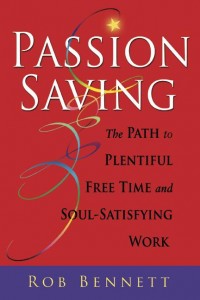
My Retire Early plan worked like a dream. The plan is described in my book “Passion Saving; The Path to Plentiful Free Time and Soul-Satisfying Work.” The idea was to save enough so that I could leave corporate employment and shift to more fulfilling work that probably would not produce as much income in the short term but that would in all likelihood produce much more in the long run. I never could have developed the Valuation-Informed Indedxing concept had I not first develpped the Passion Saving concept.
The abusive and criminal behavior of you Goons has blocked me from earning an income for 20 years. But, assuming that I obtain a $500 million settlement in the days following the next Buy-and-Hold Crisis, I will be insanely well off financially. That won’t make up for the divorce and the other emotional pains that I have experienced. But our system does not really have a good way of compensating people for those sorts of pains. It is easier to compensate for financial losses.
I wouldn’t have chosen this path if I had known all that was coming. No rational person could have anticipated what was coming — never before in U.S. history have we seen a story like this play out. So I don’t say that I am ahead of the game in an overall sense even after receicing the $500 million settlement payment. But I will be in super fine financial shape after receiving the settlement. And I think it would be fair to say that God or the Universe or Evolution or the Fates understood that someone needed to do this extremely important work before the next Buy-and-Hold Crisis hit and that I was the one elected to do it. So I am not happy with the stuff that caused anguish but I accept it as my fate to have that awful stuff directed at me as part of a bigger story in which our nation achieves a huge economic advance.
My retirement was not from all work. It was only from corporate work. I love work. I just wanted to be able to direct my hours to more fulfilling work. I have achieved that goal 500 times over. I am not able to imagine how there could be any work more fulfilling than thr work that I am doing today, opening tje entire internet to honest posting re the last 41 years of peer-reviewed research. We will all be living better and fuller and richer lives in the days following the next Buy-and-Hold Crisis, as horrible as that event will be. I am amazed and humbled to have been able to play the role that I have played in helping us all to get to a better place. I have experineced enough fulfillment to cover 50 lifetimes.
I of course didn;t and don’t like any of the ugly stuff. But the good stuff has been 20 times more good than the bad stuff has been bad. Solzhenitsyn said of the years he spent in the Soviet prison system, which brought on his conversion to Christianity, “Bless you, prison!” My variation on that is: Bless you, Goons!” I couldn’t have done it without you!
My best wishes.
Rob
“But, assuming that I obtain a $500 million settlement in the day following the next Buy-and-Hold Crisis, I will be insanely well off financially.”
During the divorce process was a future claim on the $500 million discussed?
I obtained full rights to all monies that follow from the work that I have done in the personal finance realm. In the event that I receive a settlement payment of $500 million, it is my intent to share some of that with my ex. But I am not required to do so.
Rob
The problem with you claiming that intercst should have corrected the study that day is that your suggestion would not have come up with a number lower than 4%. You suggested dividing the withdrawal rates that survived in to 3 buckets (from high, medium and low stating valuations). All the 30 year surviving percentages were 4% or higher, dividing those numbers into 3 groups would not have changed that.
I didn’t know on May 13, 2002, that the safe withdrawal rate for retirements beginning in January 2000 (the high point of the bubble) was 1.6 percent. I learned that as the result of the research that I did with John Walter Russell. But it was my May 13, 2002, that made John Walter Russell aware of the aituation and that led down the road to our research efforts.
So Greaney couldn’t have said on May14, 2002, precisely what the safe withdrawal rate was at all of the various CAPE levels. That research had not yet been done. But it was obvious that the correct number was lower than 4. 4 is the number you get when you don’t count valuations. Valuations were sky high at the time. The correct number was obviously a number a good bit less than 4.
Greaney should have added language to the study noting that he had failed to include a valuation adjustment and that the correct number was obviously a good bit less than 4. Then he should have participated in the research efforts to identify the correct number (both John Walter Russell and I invited him to join us and many, many community members would have been thrilled if Greaney dropped all the abusive stuff and participated in constructive efforts).
The goal of everyone should be to get the numbers right. That’s why I constantly say that we need to open every site to honest posting, It is possible that someone somesay will come up with an argument that the best number for retirements beginning in January 2000 was 1.5 or 1.7, not 1.6. If that happens, we will need to incorporate that new knowledge into our collective understanding (and we should of course thank the person who provided it). Under no circumstances should we threaten to murder the loved ones of those who add to our knowledge base. There shouldn’t be any controversy over that one. And there wouldn’t be any in any field of human endeavor other than the investing advice field (where there are dollars attached to attaining a reputation for possessing expertise and thus a particular unwillingness to acknoowledge errors made when not all the reaseah needed to know everything was avalable).
Greaney’s abusive behavor began about an hour after I put up the fateful post. I don’t believe that he knew at that time that the correct number for retirements beginning in January 2000 was 1.6 percent. But he clearly knew that he had not included a valuation adjustment in the study and that there was good reason to believe that one was needed to get the numbers right. Just saying that would have been a huge help. We had an entire community of people excited about the propsct of rolling up its sleeves and getting to the bottom of the safe withdrawal rate business. We lost our best people after they saw the death threats and the other garbage that you Goons advanced. But on the morning of May 13, 2002, we were in an amazing place to do some amazing work together that would have helped millions of people. Had we opened every site to honest posting in a short time, we could have gotten the CAPE value down (through market timing!) and avoided the economic crisis of 2008. That alone would have had huge economic and political benefits for all of us.
Rob
“But he clearly knew that he had not included a valuation adjustment in the study and that there was good reason to believe that one was needed to get the numbers right. ”
There is no need to include a valuation adjustment in a study that reports on past withdrawal rates (the withdrawal rates that survived are the withdrawal rates that survived, no need for any adjustment)
If you wish to estimate what withdrawal rates will survive in the future, or estimate the probability that they will survive, then you may wish to consider valuations or other factors.
Everyone understands that Greaney reported the Historical Surviving Withdrawal Rate accurately. BenSolar suggested that Greaney begin using that wording in a post that he advanced in June 2002. I said that that would of course solve the entire problem because then the study would no longer be in error and all of the people who wanted to work together to calculate the safe withdrawal rate accurately would be free to do so. Greaney didn’t go for that. Gee, I wonder why.
There is no harm in letting people know that the Historical Surviving Withdrawal Rate is 4 percent. But most people planning retirements want to know the SAFE withdrawal rate. That’s why Greaney did not correct the error. He wanted to continue to mislead people into thinking that 4 percent was the SAFE withdrawal rate. People love thinking that the safe withdrawal rate is always the same number, In a world in which the safe withdrawal rate was always the same number, there would be no negative consequences that would follow from pumping irrational exubernce up to insane levels. What a world, you know? The perpetual-motion-machine approach to investment analysis.
Back in the real world, the safe withdrawal rate is a number that ranges from 1.6 percent to 9.0 percent, depending on the valuation ;level at the time of the retirment. Reporting the numbers accurately and honestly lets people see how dangerous it is to persuade millions of people that it is not always 100 percent necessary to engage in long-term market timing. “Forget” to engage in market timing and you are going to see a bull market. Have a bull market and you are going to have a bear market. Have a bear market and you are going to have an economic crisis. Have an economic crisis and millions of people are going to lose their jobs and we are going to see an increse in political frictions.
All 100 percent unnecessary in a day when Shiller’s Nobel-prize-winning research is available for all of us to discuss. So long as most investors are regularly engaging in market timing, you could never again see an out-of-control bull market. Stock prices are self-regulating in a world in which honest posting re the peer-reviewed research is permitted. High prices bring sales of stocks, which bring lower prices. It all works nicely so long as honest posting re the last 41 years of peer-reviewed research is permitted at every site, without a single exception.
Yes?
Rob
In your utopia the stock prices can never be rational, as people are still just buying and selling without a thought given to the valuation of the individual companies. The index is weighted. If you had index funds in January 2022 you were holding a whole lot of Apple, Google, Facebook and Tesla. These were overvalued. Outside of my 401k I was holding onto mostly oil and tobacco stocks at the time. Some buy and holders (myself included) have seen their retirement savings increase during this recent bear market. More sophisticated people used options. I believe Bill Gates shorted Tesla. There’s more than one way to skin a cat.
The thing about index funds is they are dumb money whether you just follow a three fund portfolio or if you do VII. When enough people get into it, it can move markets but it’s dumb money either way. Now I’m not saying indexers are dumb. My 401k is in index funds, most people should just use index funds, but it is what it is.
I don’t see how VII could have prevented a financial crisis that was brought on by things unrelated to CAPE valuations. Care to explain in detail?
I see indexing as a huge advance. I don’t think of indedxing money as dumb money at all. An indexer is taking a bet that the U.S. economic system will remain sufficiently productive to support a strong stock return. It’s been doing that for 150 years now. So I think it is smart to believe that it may well continue doing it.
I don;t have any objections to investing in individual stocks. I think it takes a lot of work to get it right. So I would advise people not to do it unless they are sure that they love researching stocks enough for it to pay off. For the average person, I recommend index funds. But for the right person, I think it can make sense to pick individual stocks. I am glad that index funds are now an option.
The heavy promotion of the Buy-and-Hold “strategy” is always going to cause an economic crisis. It is impossible that it ever would not.
In every market that has ever existed, price discipline is the thing that makes the market work. That’s true in the car market, the banana market, the shoelace market and on and on and on. All that Shiller really did was to demonstrate that the way things work in every other market that has ever existed is also the way it works in the stock market. Price discipline/market timing is the thing that keeps the market functional. So long as most investors are engaging in market timing (adjusting their asset allocation as needed to keep their risk profile constant over time), market prices will always be roughly right. When investors start acting as if price doesn’t matter (that is, sticking with the same stock allocation no matter how poor a value proposition stocks come to provide), things go haywire. Stock prices go up and up and there is nothing to bring them down. Since the market eventually must get prices right (that is the core purpose of any market), it eventually crashes them. Which does great harm to our economic system (price crashes take huge amounts of buying power out of the economy).
Buy-and-Holders blame economic developments for price crashes. But the causation is in the opposite direction. It is price crashes that cause economic crises. Price crashes take trillions of dollars of spending power out of the economy. It would be better to just price stocks properly. Then we wouldn’t have either price crashes or the economic crises that follow from them. The hitch in the minds of the Buy-and-Holders is that to price stocks properly we have to encourage market timing. For prices to be set properly, investors need to be willing to act in their own best interest. It is in the best interest of investors to consider the long-term value proposition of stocks before purchasing them. But Buy-and-Holders tell investors that they must never do that, that they must always invest in stocks blindly, that they must never consider how much the current CAPE value affects the long-term value proposition.
Take Buy-and-Hold/Get Rich Quick investing strategies out of the equation and there is not reason to believe that we would have any more of these horrible economic crises. I believe that we would still have modest ups and downs. But nothing like what we have experienced during the days when we did not know how stock investing worked in the real world (the pre-Shiller era). We are really still in the pre-Shiller era today because, while we have his research available to us to help us become better investors, we have not yet as a nation of people given ourselves permission to discuss it at every internet site. Having Shiller’s book available in most public libraries doesn’t do us much goos if we are not all actively discussins its far-reaching implications with our friends and neighbors and co-workers on a daily basis. It is by discussing things that we come to understand them and learn how to apply what we have learned to our daily life choices.
Minimizing the use of Get Rich Quick/Buy-and-Hold investment strategies would stabilize the stock market and thereby would stabilize out economic system as well. And stabilizing our economic system would stabiize our political system to a considerable extent as well. It’s a win/win/win/win/win. I am not able to imagine any possible downside.
Rob
Charlie Munger is a buy and holder. So is Warren Buffett.
Not really. They have described themselves as such on occasion. That much is so, But Buffett has at times lowered his stock allocation and cited high prices as the reason. That’s market timing. And he has ridiculed some of the ivory tower dogmas that are at the heart of the Buy-and-Hold madness. Buffett considers Benjamin Graham to be his mentor and Greham was the first Valuation-Informed Indexer. He argued in his book that it would make sense for stock investors to go with 75 percent stocks at times of low prices, 50 percent stocks at times of moderate prices and 25 percent stocks at times of high prices. That’s market timing! That’s Valuation-Informed Indexing! That’s research-based thinking!
I am confident that, once we have opened every site to honest posting re the last 41 years of peer-reviewed research, Buffett will be a vocal advocate of Valuation-Informed Indexing. All that VII is is a combination of Buffett’s ideas (always consider the value proposition of the stocks you buy) and Bogle’s ideas (ordinary people shoud keep it simple by investing in index funds). The beauty of indexing is that it provides an easy way for the average person to invest like Warren Buffett.
Buffett is a value investor. To say that he doesn’t care about valuations is just not right. He researches thing carefully and all of his research is aimed at identify strong value proposition. Whrn he says that he disfdains market timing, what he is getting at is that he believes that short-term market tining is foolishness. Which of course is something that I believe as well. Short-term timing is a guessing game. Long-term timing is something very different, an effort to identify value, which is what Buffett is all about.
We all have been hurt by the reluctance to speak the obvious truth that market timing/price discipline is absolutely essential. Shiller has described the intellectual leap from the finding that short-term price changes are unpredictable (University of Chicago Economics Professor Eugene Fama showed this in research published in the 1960s) to the Buy-and-Hold belief that the market sets prices properly as “one of the most remarkable errors in the history of economics.” That’s what we all need to get past, Buffett included. Our unwillingness as a nation of people to acknowledge that horrible mistake is killing us.
Rob
No one claimed that Buffett doesn’t care about valuation or that he never sells, but he is a buy and holder. Do the Bogleheads never sell?
If he cares about valuation, then he is a Valuation-Informed Indexer. That’s the distinction between Buy-and-Hold and Valuatiion-Informed Indexing. Valuation-Informed Indexing is Buy-and-Hold updated to reflect the 41 years of peer-reviewed research showing that the market is not efficient, that valuations matter, that market timing (because of valuation shifts) is essential.
Am I a Buy-and-Holder? I believe that the Buy-and-Holders made lots of valuable contributions. I incorporated everything from Buy-and-Hold except the loony tunes “idea” that market timing/price discipline might not alwaus be 100 percent required into Valuation-Informed Indexing. So what am I? I am happy to be called a Buy-and-Holder if that means that I can then be friends with all the Buy-and-Holders. My first name for Valuation-Informed Indexing was Buy-and-Hold 2.0. There were Buy-and-Holders threatending to murder my loved ones if I kept pointing out the error in the Greaney retirement study. So I thought that maybe the prudent thing would be to come up with a diffeerent name. But I love Buy-and-Hold you know? I live it so much that I stuch with that core principle of Buy-and-Hold to follow the peer-reviewed research even when a lot of Buy-and-Holders were threatening to murder my loves ones for doing so. You decide what I am, I am a Buy-and-Holder who believes that we should be talking about the 41 years of peer-reviewed research that shows that market timing/price discipline is absolyely essential when buying stocks. Whatever that is, that’swhat I am.
Some Bogleheads are Valuation-Informed Indexers. But they hav e learned that it is best to keep it zipped re those beliefs, you know. Do something about the abusive and criminal behavior and they will be happy to speak up. I think that would be just great, We could all learn lots of great stuff from them.
The dogmatics? The Goons? I think that they would say to take somethinbg off the table at retirement. The idea there is that there is not as much time to recover from a loss. That makes a certain amount of sense. But the valuations issue is a much more important factor than whether one is in the accumulation stage or the distribution stage. I have never heard one of the dogmatics/Goons say that investors should lower their stock allocation in response to big price increases. That would be market timing, would it not? My understanding is that the Buy-and-Hold dogmatics OPPOSE market timing. My sense of things is that it is their opposition to market timing that is the entire cause of the friction we have been seeing for 20 years now. Take away the dogmatism about market timing and I thiink that all of the Buy-and-Holders would have been happy to discuss safe withdrawal rates in a realistic way back in May 2002.
The root isssue here is that the Buy-and-Hold dogmatics are very, very, very, very, very opposed to acknowledging the error that the Buy-and-Holders made back in the 1960s (before Shiller publushed his Nobel-prize-winning research showing that valuations affect long-term returns) when they claimed hat market timing/price discipline is not always 100 percent required. That reluctance is killing bus as a nation of people. We need to find some means to provide millions of middle-class people with accurate, honest, research-based investment advice. It cannot be done without permitting discussion of the last 41 years of peer-revieweded research because we just did not know everything that we needed to know about how stock investing works in the days before Shiller published his Nobel-prize-winning research, Buy-and-Hold is long, long, long, long overdu for an update.
My sincere take.
Rob
Buffett isn’t an indexer at all. He buys and holds individual stocks, and sometimes takes full control of a company.
Regarding what is and isn’t a buy and holder, I think that you are too rigid with your definition. In baseball is a power hitter no longer a power hitter if he also hits singles?
I still don’t agree that stock valuations had anything to do with the Great Financial Crisis. My belief is that was mostly related loose monetary policy including the proliferation of subprime mortgages. Irrational exuberance was there, but in the housing market. Care to explain your views in greater detail?
I understand that Buffett is not an indexer. Valuation-Informed Indexing takes Buffett’s key insight (value propositions matter) and applies it in the indexing context, which permits ordinary people who don’t have the time to study stocks to invest like Buffett and avoid the traps that always end up hurting those who follow Buy-and-Hold indexing strategies. Valuation-Informed Indedxing is intelligent indexing. It leaves out the Get Rich Quick element which has always caused so much human misery.
I have no objection to being called a Buy-and-Holder so long as the person calling me that notes that I consider market timing absolutely essential. Valuation-Informed Indexing is what Buy-and-Hold woild have been had the Buy-and-Holders stuck with their original vision and updated their strategy to reflect that last 41 years of peer-reviewed research in this field.
Loose monetarry policy was required to prop stock prices up at a time when the long-term value proposition of stocks had dropped very low. If we pemrmitted honest posting re the peer-reviewed research, prices never could have gotten that high in the first place. A problem avoided is a problem solved.
Rob
How would “honest posting” about index funds investing have prevented the subprime loan crisis?
In numerous ways. You can’t have trillions of dollars of pretend money (that’s what irrational exuberance is) sloshing around the economy and not suffer devastating consequences.
Much of the irrational exuberance ended up being useed to psy inflated prices for real estate. A person whose stock portfolio is temporrily priced at two times its real value is far more open to paying an inflated price than someone who is aware of the real, lasting value of his stock holdings.
The Federal Reserve felt pressured to keep interest rates lower than it otherwise would have as a means of keeping stock prices from collapsing.
Once stock prices started falling, investors collectively lost trillions of dollars of consumer buying power. This caused hundreds of thousands of businesses to go under.
The failing businesses had to get rid of millions of employees. People without jobs do not spend as much as they did when they had jobs.
An economy built on irrational exuberance is an economy positioned for collapse. Pumping in irrational exuberance (But-and-Hold! No market timing!) makes the economic look stronger than it is for a time. But all you have done when you have told people not to bother with market timing is to erect house of cards. The economic realities remain what they were before you pumped up stock prices with your claims that market timing is not really needed. The economic realities always prevail in tje end. They have to. If they didn’t, the entire system would collapse, which would be the worst outcome of all.
Valuation-Informed Indedxing (market timing!) just permits the economic realities to assert themselves more quickly. When you permit people access to discussion of what the last 41 years of peer-reviewed reserch teaches us all about this important subject, many of them elect to invest rationally. The Buy-and-Holders ASSUME an efficient market but take away the tool (market timing) that is essential to creating it. With market timing, the market is able to actually achieve efficiency in the real world. Valuation-Informed Indexing makes the Buy-and-Hold vision os what the market is a reality and that of course makes the economy much stronger and more productive.
Businesses need to know how popular their products and services are. How could they possibly know when trillions of dollars of irrational exuberance are sloshing around, causing people to make purchases they would never make if they were permitted to know the real numbers? Shiller did not put an exxlamation mark after the words “Irrational Exuberance” in the title of his book. He was not saying that it is a good thing. Irrational Exuberance is a cancer. We should all be doing everything in our power to rein in irrational exuberance to the greatest extent possible. That means providing regular reminders to our friends and neighbors and coworkers of the importance of market timing.
Rob
A person with an inflated real estate portfolio might take money out of the market and put it into real estate. The subprime crisis was caused by lending to people with subprime mortgages. These people had low incomes, low/no down payment, bad credit, etc.
Warren Buffett and Charlie Munger say that timing the market is a fool’s errand. Do you think they’re wrong?
They were referring to short-term timing when they said that. They are right about short-term timing.
Short-term timing is a guessing game. That’s why it doesn’t work. Long-term timing is about identifying strong value propositions. Buffett’s entire investing career is about identifying strong value propositions.
Rob
Long term with more people putting more money into the market by payroll deduction it does make sense for valuations to go up. Then you have to consider the effects of globalization. America’s multinationals benefitted more from globalization than any single entity other than perhaps the Chinese Communist Party.
If the U.S. economy became more productive than it has been in the past, it could support a higher average long-term stock return than the 6.5 percent real that is has supported for the past 150 years. But some would say that the 20th Century was the American Century and that it is likely that the average long-term return will be a bit less in the future than what is has been in the past. That’s a judgment call for the individual investor to make.
Are you suggesting that Greaney is expecting U.S. productivity to take a leap large enough to pull the safe withdrawal rate up from 1.6 percent (a number that assumes that stocks will perform in the future at least somewhat as they have always performed in the past) to 4.0 percent for retirement beginning at the valuation level that applied in January 2000. That would be an amazing leap. If that’s the assumption, he should tell people that so that they know what assumptions they are buying into when they use the 4 percent number. He certainly shouldn’t say that 4 percent is “100 percent safe” without noting that the calculation is rooted in an assumption that many would consider pretty darn wild.
I don’t doubt that there would have been some who would have used the 4 percent number in their retirement plans even if he did say that. But I am certain that there would have been some who would have gone with a lower number if they knew that that was the assumption. I believe strongly that these sorts of things should be disclosed to people.
Personally, I am inclined to go with a number that assumes that stocks will continue to perform in the future somewhat as they have always performed in the past. Not because I know that that will happen. Because that strikes me as the most neutral option. To the extent possible, I like to take my personal subjectivity out of it. But I have zero problem with others doing otherwise. My problem is with the idea of people being sold the 4 percent number without being told of the assumptions that produced it. I don’t recall Greaney ever saying that his study was rooted in an assumption that productivity would be higher in the future than it has ever been in the past.
This points to another benefit of opening every site to honest posting. When studies are scrutinized from many different angles, we all come to a better understanding of how they were put together and we can then have more confidence in them. It’s our retirement money that we are talking about here. We should all want to heat as many different perspectives re these matters as possible, in my assessment. I get the willies when I see all perspectives other than the one held by the author of a study being suppressed.
Rob
It looks like year 2000 retirees are doing just fine
https://www.bogleheads.org/forum/viewtopic.php?p=7056547#p7056547
I didn’t read the thread. But I agree that, given the CAPE values that we have seen in recent years, Year 2000 retirees who took a 4 percent withdrawal should be doing just fine.
But the question that a safe withdrawal rate study is intended to answer is not “is there a chance that this retirement will do just fine?” It is “will this retirement survive even in a worst-case scenario (the least faovriable returns sequence that we have seen in history but nothing worse than that)? Retirements that began in January 2000 with a 4 percent withdrawal had only a 30 percent chance of surviving for 30 years, according to the historical return data.
You have to take a big hit sometime in the first ten years for the retirement to fail. Otherwise, the portfolio value will have been built up enough that nothing that we have seen in the history of the U.S. market would be enough to bring it down. The Year 2000 retiree took a hit in the 2008 economic crisis. But prices recovered about a year later. So long as prices recover in that amount of time, the retirement is going to be fine.
But what would happen if the CAPE value fell to 8 (the CAPE value usually drops to 8 at the end of a long bull market) over the course of the next year and then stayed somewhere in that neighborhood for 10 years. If the portfolio started at $1 million, the drop from 30 to 8 would subtract almost $700,000. And ten years of $40,000 withdrawals would subtract another $400,000. That retirement is not “100 percent safe.”
Sooner or later, we are going to hit a situation like that. It will be too late for those who suffer failed retirements for us to begin permitting honest posting at thst time. We should have corrected the studies as soon as we learned they were in error. We should set up the studies to do what they purport to do — identify the SAFE withdrawal rate. That number cannot be calculated honestly and accurately without taking the valuation level that applies at the time of the retirement into consideration. The safe withdrawal rate CHANGES with changes in valuation levels.
Rob
Those year 2000 retirees probably made some adjustments, Evidence. I’m not sure why Rob is so stubborn.
I’m stubborn about getting the numbers right in retirement studies, that woulc be fair to say. I offer no apologies for it.
If the analysis is done properly, there should be no need to make adjustments. The point of safe withdrawal rate analysis is to identify the withdrawal rate that is virtually certain to work presuming that we don’t see anything worse than the worst returns sequence we have seen in U.S. history. Nothing is 100 percent safe (Greaney’s claims to that effect notwithstanding). But a properly calculated safe withdrawal rate is a highly conservative number. Adjustments should not be required.
If someone wanted to make adjustments as the retirement proceeded, he could take a withdrswal rate higher than the safe withdrawal rate. The higher you go above the safe withdrswal rate, the more likely it is that you will need to make adjustments. There’s still no reason to use improperly calculated numbers. The properly calculated numbers give yuu a good idea of what the chances are that you will have to make adjustments and how large those adjustments are likely to be.
Improperly calculated numbers don’t tell you much of value at all. The properly calculated safe withdrawal rate is a number between 1.6 percent and 9.0 percent, depending on the valuation level that applies. What do the studies that produce the 4 percent mumber tell you re the need to take adjustments beyond what you could gather from common sense. Take a 4 percent withdrawal for a retirement where the accurately calculated number is 9.0 percent and you are very, very safe. Take 4 percent for a retirement with a 1.6 safe withdrawal rate and there’s a good chance that you will need to make adjustments. Isn’t that something you could have figured out on your own?
Accurately calculated numbers provided actionable insights. I am a big believer in permitting the discussion of accurate safe withdrawal rate numbers. I think that the accurately and honestly calculated stuff is the future.
Rob
Your stubbornness got this thread to over 100 comments. Congratulations! Let’s have a glass of wine to celebrate.
That sounds fine.
I hope that someday we get to do it in person and to have a few laughs over the craziness of the old days.
Take care.
Rob
Has there ever been more comments on a thread at your site? This is very, very, very very, very big news. If I was closer to you I really would offer to meet up at Chipotle or Starbucks, or whatever. I’d be willing to buy you a meal and help you fill out job applications!
I would be happy to shsre a meal, Sensible. If you suggested that we split the check, I would check your calculations very carefully to be sure that you got the numbers right.
I believe that there have been threads with a larger number of comments. I don’t have too much of an inclination to go back through them all and check.
Rob
Hang in there, Rob.