Set forth below is the text of a comment that I recently posted to the discussion thread for another blog entry at this site:
You are not owed anything by the people of the United States. People do not have to do one single thing for you, despite your demands, what you think you are owed or what you think you are entitled with. You haven’t earned a dime until someone else has agreed to pay you for something specific in return.
If you REALLY earned something that someone else asked you to do, for an agreed upon amount, then you have something. Unfortunately for you, that is not the case.
The people of the United States owe THEMSELVES the opportunity to live in a world in which the same laws that apply in every field of human endeavor outside of the investment advice field apply in the investing advice field as well. And there is a part of them that already understands how important it is that they deliver that gift to themselves. If we did not as a nation of people believe that there is merit in learning about what the peer-reviewed resarch teaches us all about how stock investing works in the real world, we would have shut down all the peer-reviewed journals. We would not have permitted Shiller’s book to be published or made it a best-seller. We would not have awarded him a Nobel prize or invited him to participate in interviews. There would not have been thousands of us who put forward posts expressing a desire that every discussion board and blog be opened to honest posting re the last 42 years of peer-reviewed research in this field.
I think it would be fair to say that the good news re this matter has been 20 times more good than the bad news re this matter has been bad. We are as a nation of people on our way to some very exciting places.
My best and warmest wishes to you and yours regardless of what investment strategy you elect to follow.
Rob

We soooo stooopid. We not smart like Robbie Bennett. We not rich like Robbie Bennett. We just dirt poor mooorons.
If you truly believed in Buy-and-Hold on a deep level, you would be okay with taking a look at what the peer-reviewed research says.
My sincere take.
Rob
“ If you truly believed in Buy-and-Hold on a deep level, you would be okay with taking a look at what the peer-reviewed research says.”
I did. Research told me that but and hold has always worked, while timing schemes have never worked. Thus, I have enough money to comfortably retire. Do you?
You don’t know how much you have, Anonymous, You don’t subtract for irrational exuberance. How could you possibly know?
Rob
Actually, it is you that has no clue how much I have. We are of similar age and I can buy a $1+ second home home right now. How about you? I can buy any luxury car right now, how about you? I can go on a trip to Europe right now, how about you?
Your portfolio statement reports a figure for the value of your stock holdings. How much have you subtracted from that number to reflect the irratoonal exuberance present in today’s stock price?
Rob
By your silly math, how much should I add given that markets always rise in the future? By following buy and hold, I have more money than I will ever spend.
In your bizarro world, you add money to your zero bank account while telling others they will lose their money. Look at how bad those past predictions worked out for you. Every single one failed.
The stock price that would apply if the CAPE value were 17 (rather than 31) reflects the gains that will follow in the future presuming that the U.S. economy remains as productive in the future as it has always been in the past.
Rob
Only market timers need to be concern with temporary movements. Buy and holders will gladly take stock from poor market timers. You don’t have to worry. You don’t have any money left to lose.
It was tempotary movemernts in stock prices that served as the primary cause of the Great Depression. And the Great Recession. And the stagflation of the 1970s. The relentless promotion of the pure Get Rich Quick/Buy-and-Hold “strategy” has done great harm to millions of people over the years. We should all be grateful that we now have available to us 42 years of peer-reviewed research pointing us to a better way and we should be permitting honest posting re that research at every internet site, without a single exception.
That’s where I am coming from re this one in any event, Anonymous. My best and warmest wishes to you and yours.
Rob
If you don’t understand the true cause of the crash and depression, then don’t invest. Your poor track record should scare the heck out of anyone. No one wants to be broke like you.
Okay, Anonymous.
I naturally wish you all the best that this life has to offer a person, regardless of what investment strategy you elect to pursue, in any event.
Rob
When you gave an update to your retirement plan in 2005, you said that VII would help you catch up to buy and hold and also eventually surpass it. Why haven’t we seen that happen yet?
Obviously because prices haven’t crashed yet. They crashed briefly in late 2008 but then returned to high levels in less than a year’s time.
Prices have in recent years remained at high levels for a longer period of time than ever before seen in U.S. history. There was no way for me or anyone else to anticipate that. There was no precedent for it. We are today sailing in entirely uncharted waters.
Rob
So what you are saying is that your timing scheme didn’t work.
Of course it worked. Long-term market timing (the only kind that I endorse) works on the day the change in stock allocation is made. The purpose is to restore the investor’s proper risk profile. That happens on the day the allocation change is made. How could price discipline (that’s what long-term timing is) ever not work?
If you wanted to buy a car with a market value of $30,000 and you went to a dealer who asked $60,000 and you elected not to buy, would you say after you noted that six months later he was still asking $60,000 for that car that you now realized that your decision to reject the crazy price had “not worked”? Of course it worked. You could buy two of those cars for that price. It’s better to have two cars than to have one. Once stock prices crash, you will be able to buy double that shares of stock than what you could buy if you made your purchases at the crazy prices that apply today. How would it “not work” for you to have twice as much stocks as the person who ignored price? It’s better to have more. Stocks are a great long-term asset class.
Do you see?
Rob
It didn’t work. You depleted your savings. You were off 18 years ago and never saw the drop you were expecting to get back in.
I depleted my savings because of the abusive and in some cases criminal behavior of you Goons. That has nothing to do with Shiller’s amazing research findings.
It’s true that prices have remained high for far longer than I expected they would. There’s no way to predict short-term price movements. I noted that every time I offerd a prediction of where prices might go. Any investor who is not willing to make allocation changes without being sure that his short-term price expectations will be provern out should just follow a Buy-and-Hold strategy. I have never seen any indication that short-term timing can be pulled off.
That’s my sincere take.
Rob
How did the goons do that? Did they spend your money? Did they block you from investing? You didn’t have any business income, book income, etc. so what specifically did they do?
Once I pointed out the error in the Greaney retirement study (it lacks an adjustment for the valuation level that applies on the day the retirement begins), they posted abusively in response to every comment that I advanced. I have had numerous big-name experts endorse my work and have seen thousands of my fellow community members express a desire that honest posting re the peer-reviewed research be permitted. The shift from Buy-and-Hold to Valuation-Informed Indexing is the biggest advance in the history of personal finance. So I would have earned hundreds of millions had you Goons not engaged in insane amounts of abusive and crininal posting. Instead, I have been banned (at your insistence) at every site at which I continued to engage in honest, research-based posting.
I believe that things will change in the days following the onset of the next Buy-and-Hold Crisis. We’ll see. It’s hard for me to imagine that things will EVER change unless more of those of us who believe that Shiller’s Nobel-prize-winning research is legitimate research work up the courage to “cross” you Goons by insisting on our right to post honestly re what the new research says.
Rob
How would you have earned millions? You don’t have anything to sell and no one has asked for your services. Why would anyone ever just hand you money? What we are talking about is investment strategies to provide for a secure retirement. You VII strategy that you laid out in your retirement plan didn’t work.
How would you have earned millions? You don’t have anything to sell and no one has asked for your services. Why would anyone ever just hand you money? What we are talking about is investment strategies to provide for a secure retirement. You VII strategy that you laid out in your retirement plan didn’t work.
No one is ever going to just hand me any money. We have seen during the first 21 years of our discussions that there are millions of investors who would like to have access to honest, accurate, research-based investment advice. I can produce products and services that will bring in hundreds of millions of dollars in no time at all once every internet site has been opened to honest posting re the last 42 years of peer-reviewed research. The only thing standing in my way for 21 years running has been the abusive behavior of you Goons.
You of course would never have objected to honest posting re the research if you had not seen how much interest there is in it. And this is a highly lucrative field. Show people a way to invest that greatly increases returns while also greatly diminishing risk (the Bennett/Pfau research shows that that is what Valuation-Informed Indexing is) and you are going to make mountains of money. So at least this sometimes sad story comes with an amazingly happy ending!
Rob
I missed the part in your 2002 plan where you would be selling millions of products/services. You realize this is all about investing wisely for retirement, right?
How would you be making millions? Set aside the fact that you don’t have any materials to sell. When you look at people like Bernstein, Pfau and Shiller, very little of their income comes from their publications. Further, your whole plan and the entire conversation is building a retirement portfolio to fund your retirement needs. I don’t see anything in your plan from 2002 that involves selling millions in products and services.
I missed the part in your 2002 plan where you would be selling millions of products/services. You realize this is all about investing wisely for retirement, right?
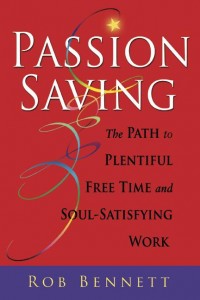
I wrote an entire book (“Passion Saving: The Path to Plentiful Free Time and Soul-Satisfying Work”) about my approach to financial independence. For me, it was never about putting aide x amount of money so that I could sit in a rocking chair for the remainder of my days. It was about having enough money put aside so that I could do the sort of work that I had always wanted to do, idependent journalism. I wanted to apply the same skills that I had been applying in the corporate world but with the freedom to pursue stories that a corporation might not want to finance. Part of the appeal of that approach is that in the end you might make MORE money because corporations are sometimes too focused on the short-term.
That’s Valuation-Informed Indexing! That’s precisely what I am doing! My Passion Saving plan permitted me to develop the Valuation-Informed Indexing concept. There’s a mountain of money in this. Everyone on the planet wants to know how to become an effective investor. So there’s a sense in which it is the perfect journalism projectn — help people to understand something that theu very much need to understand. In ordinary circunmstances, I would have thousands of competitors for this niche. Except for one thing. We all have a Get Rich quick/Buy-and-Hold impulse that causes us to LOVE< LOVE, LOVE irrational exubnerance for so long as stock prices remain high and to come to regret accumulating it only after they have crashed. So there's no money whatsoever in this in the short term. I haven't made a dime in 21 years. But I have been able to gradually and carefully develop the Valuation-Informed Indecing concept for 21 years, waiting for the day when it is able to generate hundreds of millions of the green stuff for me. That's how Passion Saving works. You live off of your savings so that you can put your energies to more value-producing tasks. Then you reap the rewards. It's an investment in yourself. I never could have done the work that permitted me to develop the Passion Saving concept if I had not first developed the Passion Saving concept that made it possible. This is why people at the old Motley Fool board got so excited about this stuff. Retirement doesn't have to be about spending the rest of your life sitting in a rocking chair. It can be about becoming more You before you die. The only thing you need to retire from is the corporate ball and chain. It works, you know? Passion Saving rules! That's part of the story too. My sincere take. Rob
When you look at people like Bernstein, Pfau and Shiller, very little of their income comes from their publications.
I am not an investment expert. I never had any interest in being one and I never made any effort to become one. I am a journalist. Every dime that I earn will come from journalist-type endeavors.
This is the biggest journalism story of my lifetime. We have millions of people with a great desire to know how stock investing works and and an investment advice field that made a mistake in the 1960s that has caused so much human misery that everyone who works in the field is afraid to talk about it because they feel that it would make the Buy-and-Holders — who are wealthy and powerful and well-connected people — feel bad. The only reason why we are not today talking about Valuation-Informed Indexing at every site is that it is such a huge advance over Buy-and-Hold that it makes the Buy-and-Holders feel bad for people to learn about it. Had Shiller published his amazing research in 1961 rather than in 1981, there never would have been a Buy-and-Hold.
We all want the same thing. we all want to know how to invest effectively for the long-term. But the Buy-and-Holders came up with this “idea” in the 1960s that market timing/price discipline might not always be 100 percent required and now they feel that they are stuck defending it. What kind of “experts” would they be if they had been telling people the opposite of what works for 42 years now. That’s the entire deal. It’s about a mistake that was made by a group of good and smart people who made many important contributions to the field but got one item horribly wrong — instead of saying that price discipline is 100 percent required as it is in every market that has ever existed, they came up with this loony tunes thought (I don’t say that they knew it was loony tunes, just that they did not have the research avaialble to them at the time showing that it was looney tunes) that maybe the stock market was the only market that ever existed in which price discipline was not 100 percent required for every participant for the market to function properly.
Telling the story of how that all happened is a JOURNALISM function. That’s what I am. That’s what I do. This story shows the importance of journalism, why it is such a noble profession. We need journalists to discover this sort of thing and help the entire nation by doing so. You hear about the Washington Post all the time nowadays, The Post is considered the second most influential newspaper, next to the New York Times. That wasn’t always the case. That happened because the Washington Post broke the Watergate story. That story made a difference in millions of lives. The Valuation-Informed Indexing story is bigger than Watergate. This allows millions of people to retire many years earlier while taking on only a fraction of the risk that they thought they needed to take on during the Buy-and-Hold Era. And it stabilzes our entire economic system, as well as our political system to a considerable extent.
There is no way that this story could be broken without a journalist getting involved. There are many people who work in the field who very much want to tell it. But they live in fear that their careers will be destroyed if they “cross” the Buy-and-Holders by talking about the far-reaching how-to implications of Shiller’s Nobel-prize-winning resarch. A journalist is needed to clear the field and then all of the good people who work in this field will be able to do the good work that they got in this field to do. All of those people will be freed to HELP investors once this story is written up on the front page of the New York Times. That’s where all this is leading. It changes the investment advice field in a profound way. But the journalism has to come first, it is the journalism work that I am doing and that I will be compensated for that is the driver here.
No one would have voluntarily signed up for what I have been put through. You would have to be a crazy person to do that. But someone had to do it. The future of our nation depends on someone working up the courage to stand up to you Goons and tell the world why price discipline is every bit as important in the stock market as it is in every other market that has ever existed. I was the one that the universe chose to do this work. So I have given it my best shot. That’s pretty much it.
My best and warmest wishes.
Rob
So your plan on making money is to be selling people on the concept of your investment scheme versus making money utilizing the investment scheme. Got it.
“ I am not an investment expert.”
You said at one time that you are in the top 10 of investment experts. You are also telling people that they should invest with market timing. If your not an expert, you shouldn’t be telling people what to do from an investment perspective.
There is a sarcstic tone evident in your comment, which is unfortunate. But the statement is essentially correct. I follow Valuation-Informed Indexing principles (which are the same as Buy-and-Hold principles, with the sole exception that market timing/price discipline is encouraged rather than discouraged) when investing. That means that I will earn higher lifetime returns while taking on less risk. Following VII priciples will generally add hundreds of thousands of dollars to one’s portfolio over the course of a lifetime. So it is no small thing. But it’s not something that is going to make someone millions overnight. It’s not intended to be that.
I believe that the journalism work will bring in hundreds of millions overnight. That’s because the 42-year cover-up has been so brutal. We have thousands of good and intelligent and hard-working people who long to do honest work in this field and who will be freed to do so once one large site opens itself to honest posting re the last 42 years of peer-reviewed research and promises to protect those who do honest work from the sorts of individuals who have posted in “defense” of Lindauer and Greaney. The leverage here is completely off the charts. And of course there are financial rewards that go to the person who led us from the Buy-and-Hold Era to the Valuation-Informed Indexing Era. It’s work that helps people that generate value and it would be hard to imagine anything that would produce more value than my idea of opening every internet site to honest posting re the last 42 years of peer-reviewed research, without a single exeption.
Hang in there, old friend.
Rob
“That means that I will earn higher lifetime returns while taking on less risk. Following VII priciples will generally add hundreds of thousands of dollars to one’s portfolio over the course of a lifetime. So it is no small thing. But it’s not something that is going to make someone millions overnight. It’s not intended to be that.”
But you haven’t earned higher returns and you depleted your retirement savings. Meanwhile, many of us have built up portfolios into large 7 figures that we know, by the historical market, will continue to go up in the long range.
With timing schemes you have to get out and back in at the right times and even you haven’t been successful in doing that. Your plans now are to rely on millions from journalism or from some theory around getting settlement payments from some unknown people for someone unknown reason that no attorney will touch.
You said at one time that you are in the top 10 of investment experts. You are also telling people that they should invest with market timing. If your not an expert, you shouldn’t be telling people what to do from an investment perspective.
Shiller is an investment expert. I say that ordinary people (non-experts) should be permitted to discuss Shiller’s Nobel-prizr-winning research at every site, without a dsingle exception. I say that there should be no abusive posting, certainly no criminal behavior.
What’s the alternative? I first posted to the Motley Fool board in May 1999. The first thing that I did when I arrived at the board was to check out Greaney’s study to see if it contained a valuation adjustment. I saw that it did not but I kept it zipped re the error in the study because I could see that Greaney was a highly abusive poster and that his not like it one tiny bit when people asked questions about how he set up the study. Was that a good thing? I sure don’t think so. I believe that I had an obligation to my fellow community members to point out the error in the study that many of them were using to plan their retirement. I am ashamed that it took me three years to work up the courage to put forward that famous post “crossing” John Greaney.
I have learned a lot from both investment experts and ordinary investors over the past 21 years. I believe that we all should be permitted to post our honest views at every site, without a single exception. Shiller’s amazing research does us no good if we do not discuss it and come to understand it well. The results of the 21-year cover-up can be seen in today’s CAPE level of 31. Holy moly! Something like that would not be possible in a world in which honest posting re the research was permitted (and encouraged!) at every site.
I am not an investment expert in the way that the term is conventionally used. But today’s realities are exceedingly strange. I am certainly more of an expert that anyone who says that he believes that there might be an alternative universe in which everything works the opposite of how it has always worked on good old Planet Earth and that market timing/price discipline might not be 100 percent required for every investor. Anyone who is 42 years behind in his reading of the peer-reviewed research in his field is not a true expert.
That’s where I am coming from re this one, Anonymous.
Rob
“That means that I will earn higher lifetime returns while taking on less risk. Following VII priciples will generally add hundreds of thousands of dollars to one’s portfolio over the course of a lifetime. So it is no small thing. But it’s not something that is going to make someone millions overnight. It’s not intended to be that.”
But you haven’t earned higher returns and you depleted your retirement savings. Meanwhile, many of us have built up portfolios into large 7 figures that we know, by the historical market, will continue to go up in the long range.
With timing schemes you have to get out and back in at the right times and even you haven’t been successful in doing that. Your plans now are to rely on millions from journalism or from some theory around getting settlement payments from some unknown people for someone unknown reason that no attorney will touch.
Long-term market timing/price discipline does not require that the investor take guesses as to when prices will turn. There is a mountain of evidence showing that that doesn’t work. All that is required is that the investor be interested in keeping his risk profile constant over time and that he be open to taking the message of the past 42 years of peer-reviewed research (showing that valuations affect long-term returns) into consideration in his efforts to do that. The Bennett/Pfua research shows that that always works. That is hardly a surprise given that it is a logical impossibility that it would ever not work. In a world in which valuations affect investment results, rational investors look at valuations when setting their stock allocation. Not one intelligent person would ever have questioned this had the Buy-and-Holders not made the horrible mistake that they made back in the 1960s (at a time when Shiller’s Nobel-prize-winning research had not yet been published).
My best wishes.
Rob
Nothing worked the way you said it would. Wade warned you when he made the following comment:
“ What is Step 2? There isn’t one. You will still be in the same position as you’ve been in for the last 10 years. Why didn’t something happen for you after the 2008 financial crisis? You are like the guy who keeps predicting new ends for the world as each previous prediction date passes by.
That is why I’m telling you, from one human being to another, that it is time to move on. ”
But, you wouldn’t listen. Now you are broke.
I still believe to this day that the retirement study posted at John Greaney’s web site lacks an adjustment for the valuation level that applies on the day the retirement begins. That’s the thing.
Step 2 is that everyone in the United States experiences the next Buy-and-Hold Crisis and regrets having failed to take seriously Shiller’s Nobel-prize-winning research showing that valuations affect long-term returns and we all move to the far superior Valuation-Informed Indexing strategy that permts us all to live richer and fuller and freer lives. I can live with that.
Wish us luck!
Rob
It is not a step 2 because it is just a fairytale. If I was broke and divorced, you would say that my plan failed, right?
If there was 42 years of peer-reviewed research showing that valuations affect long-term returns, I would say that it is a logical impossibility that the safe withdrawal rate is the same number regardless of what the valuation level is on the day the retirement begins.
Rob