Set forth below is the text of a comment that I recently posted to the discussion thread for another blog entry at this site:
You claim that your timing scheme can help make people money, yet it doesn’t. This has been the basis of why you think you should get $500 million. However, you also state that Shiller and Pfau say people should time the market. If that is the case, then why should anyone pay you anything. It would be from their work right? Shouldn’t they get paid? You didn’t come up with the idea. Also, since Pfau pointed out that your timing scheme has worked since Shiller’s work. Does that mean that you owe people money for peddling a failed scheme?
Humankind did not arrive on Planet Earth with a manual on how stock investing works. We are learning as we go. The Buy-and-Holders made many amazing contributions. I 100 percent recognize them for that and am grateful to them for that. They made a mistake on market timing. They got it right re short-term timing — the evidence shows that that does not work. But they failed to distinguish short-term timing (which is just a guessing game) from long-term timing (which is price discipline. They made their mistake because they were working under a false belief that the market is efficient. Shiller discredited the Efficient Market Theory. which means that long-term market timing must work.Price discipline works in every market in which it has been employed. There has never been any reason for believing that it is not 100 percent essential in the stock market as well except for the Efficient Market Theory, which has now been discredited, freeing us all to explore what really works.
My contribution will be to open every site to honest posting re the last 42 years of peer-reviewed research. Shiller’s research does no good if we are not all free to talk about it at every site. We all have a Get Rich Quick/Buy-and-Hold impulse residing within us which causes us to want to believe that perhaps it will all turn out different this time, that perhaps this will be the first time in history when a pure Get Rich Quick/Buy-and-Hold “strategy” does not cause widespread human misery. Id we are going to overcome our Get Rich Quick/Buy-and-Hold urge, we need to be able to hear from thousands of our fellow investors helping is to tune out the noise of the Wall Street Con Men, who continue to advocate Get Rich Quick./Buy-and-Hold “strategies to this day, re years after they were discredited by the peer-reviewed research.
Today’s CAPE value reveals how much good it does us to have Shiller’s book carried in all of the libraries but not being able to explore the far-reaching how-to implications of Shiller’s Nobel-prize-winning research at every site. Without the discussion, the research and the book do not help. To have the book carried in libraries but not to permit all investors to talk over the meaning of Shiller’s amazing research is like mentioning one time that gaining too much weight can lead to heart disease but banning all discussions of how to develop good eating habits and not permitting people to share recipes for healthy meals. The follow-up implementation stuff is of hugre value. Once every site has been opened to honest posting re the research, we will be getting mountains of the follow-up implementation stuff.
I proposed that we start down that road on the morning of May 13, 2002. The work that I have done would obviously have brought in a very big multiple of $500 million ir it had not been for the absusive and in some cases criminal bahevaior of you Goons and of the site owners who encouraged your behavior by banning honest discussion of the peer-reviewed research. I have said that I would be willing to settle my legal claims for $500 million because it is such an absurdly big number that I don’t see any great need to seek more and because I would like to put the ugliness of lawsuits behind us so that we can all work together to get the word out about Shiller’s amazing research findings to every investor on the planet.
Does all of that not make perfect sense?
Rob

What work have you done? What abusive posting? You can’t even give links to anything.
Honest (truthful) posting has never been banned. YOU have been banned for your behavior.
Woe is me, Anonymous.
Rob
People who refuse to answer questions get banned from boards. People don’t want to take direction from broke people.
I continue to believe that the retirement study posted at John Gteaney’s web site lacks an adjustment for the valuations level that applies on the day the retirement begins.
That’s where I’m coming from re this thing.
Rob
That’s been addressed thousands of times. Look at your results. You are broke. Don’t you think it is time for a new plan?
The Greaney thing hasn’t worked for you. Nobody is buying it. Maybe you should try the Sovereign Citizens approach or one of the other latest victim trends.
I wish you all good things, Anonymous.
I’d like to think that that might help a tiny bit.
I can say that I wish you all good things. I am not able to say that I believe that the Greaney retirement study contains a valuation adjustment. That one’s not in me.
Hang in there.
Rob
“Alex, I will take losing strategies for $1000, please”.
You would call discovering the cure for cancer a losing strategy if it required Greaney to correct the error in his retirement study.
Rob
No one is buying your book or anything else that you’re selling, Rob. Everyone, including your now-ex wife, has rejected your theories.
Those of us who held stocks have done very well. You missed many chances to “buy the dip”. You have failed and need to change course.
No one is buying your book or anything else that you’re selling, Rob. Everyone, including your now-ex wife, has rejected your theories.
I’m definitely not as popular as I was in the days before I pointed out the error in the Greaney study. That’s so by a factor of about 5,000.
That reality doesn’t persuade me that I was wrong to point out the error. It persuades me that there is something important and messed up going on that as a journalist I need to come to understand better and report on to the world.
Rob
Those of us who held stocks have done very well. You missed many chances to “buy the dip”. You have failed and need to change course.
You won’t know whether you have done well or not until you experience the effects of the next Buy-and-Hold Crisis. Your statement suggests that you are treating your irrational exuberance gains as real.
The phrase “buy the dip” suggests that short-term timing can work, that you can guess when prices will shift. I don’t believe in short-term timing. That’s one of many re which I am in complete agreement with the Buy-and-Holders.
I believe in Staying the Course in a meaningful way. When prices drop enough that I can buy stocks and still have a stock allocation that fits with my risk profile, I think it makes sense to buy stocks. To know whether that condition is met, I need to look at the CAPE value. It’s possible for prices to dip and to still be too high for someone with my risk profile. When it is possible t buy without causing my risk profile to get out of whack, I think it makes sense to buy.
Rob
“ When prices drop enough that I can buy stocks and still have a stock allocation that fits with my risk profile, I think it makes sense to buy stocks. ”
With what money? Given your inferior returns with market timing, you ran out of cash. You don’t have anything left to buy stocks. Your time for waiting is not infinite. Meanwhile, buy and hold has always worked.
In the land of Hocomania, a $7 million portfolio is only worth $1.75 million, yet a $0 market timing portfolio is worth $500 million. We all waited the last 20+ years to see “how it would all play out” and look at what happened. You lost your wife, your house and your money. How much worse does it have to get before you finally admit that you had it all wrong? If this happened to a buy and holder you would be gloating every single day on your website. Instead, you lost the game and told everyone that you are the Grand Prize Winner.
With what money? Given your inferior returns with market timing, you ran out of cash. You don’t have anything left to buy stocks. Your time for waiting is not infinite. Meanwhile, buy and hold has always worked.
If Buy-and-Hold were a real thing, there never would have been a single case of abusive posting.
If there had been no abusive posting, I would be one of the richest people in the United States today.
The problem is that Buy-and-Hold has been hanging on by a thread ever since Shiller published his Nobel-prize-winning research showing that valuations affect long-term returns (and that market timing is thus 100 percent required for every investor who wants to keep his risk profile constant over time).
The leap from Buy-and-Hold to Valuation-Informed Indexing is a huge advance. That’s a good thing, not a bad thing. But it’s also a diffuclt thing when you’ve got a large number of wealthy and powerful and well-connected people who have been giving dangerous investment advice for many years now and who would have to learn how to pronounce the words “I” and “Was” and “Wrong” for all of us to begin living better and richer and fuller and freer and happier lives in the future.
I think we’ll get there in the days and years following the onset of the next Buy-and-Hold Crisis But we’ll see, you know. I would be grateful if you could find it in your heart to wish us luck.
Rob
In the land of Hocomania, a $7 million portfolio is only worth $1.75 million, yet a $0 market timing portfolio is worth $500 million. We all waited the last 20+ years to see “how it would all play out” and look at what happened. You lost your wife, your house and your money. How much worse does it have to get before you finally admit that you had it all wrong? If this happened to a buy and holder you would be gloating every single day on your website. Instead, you lost the game and told everyone that you are the Grand Prize Winner.
I would need to see the page in the Greaney retirement study showing the adjustment for the valuations level that applies on the day the retirement begins. I’ve been waiting for that for 21 years now. I can’t help but wonder why I haven’t seen it.
Rob
Stubbornness and pride are your biggest problems. You refuse to say the words “I was wrong”. Much like the investment returns that Anonymous and I are seeing compounds in our favor, your stubborn refusal to admit that you are wrong compounds your errors.
Your error about Greaney has been explained by thousands of people for the last 20 years. Your wife (now ex-wife) pleaded for 20 years for you to support the family. Seems like you have a problem with listening and learning. Now you are divorced and broke.
Okay, Sensible.
Rob
Okay, Anonymous.
Rob
Rob,
When previously asked, you said that anything that is 10 years or longer is considered long term. Have you changed your mind on that definition?
I haven’t changed my mind. But the same caveats that I cited on earlier occasions when I described 10 years as the long-term of course still apply.
The primary influence on stock prices is investor emotion. We do not have tools available to us to say when investor emotion will shift. We can say that prices have usuaully returned to reasonable levels within 10 years. But we cannot say with certainty that that will continue to be the case. We can say with near certainty that prices will correct. But we cannot say when.
That means that stocks are more risky when prices are high. So investors seeking to Stay the Course in a meaningful way need to lower their stock allocation at such times. That’s market timing!
Rob
You said long term timing works. Your definition is 10 years. You talk about the last 42 years since Shiller’s work. Market timing hasn’t worked the last 42 years while buy and hold has been successful. If it doesn’t work in the timeframe you describe, then it has failed. Further, 42 years cover an ENTIRE working career and people are retired by the end to that timeframe. Average life expectancy is in the 70’s. We don’t just keep running the clock for 150 years.
Now look at your response. You say that you cannot say when prices will correct. You are then confirming that timing won’t work. For your scheme to work, it has to be bound by time as we do not have infinite time. Further, you then cannot make any claim about long term timing working since your definition is 10 years.
I cannot say when prices will correct. That’s a fact. If that bothers someone, that someone should not become a Valuation-Informed Indexer. Problem solved.
It bothers me to the extent that I would like us to know as much as possible and the time when prices will correct is not known to us. But it doesn’t bother me so much that I am willing to give up the many benefits of market timing. If we know that a price crash is coming but we don’t know exactly when, we know that risk has increased. So we know that we need to lower our stock allocation to keep our risk profile constant, to Stay the Course in a meaningful way. That’s pretty darn important stuff. I’m not going to give up marklet timing just because we don’t know everything there is to know.
Valuation-Informed Indexing worked like a dream in the early 1980s. It put investors at higher stock allocation than Buy-and-Hold would have put them and returns were outstanding. If that’s “not working,” I’d hate to think what “working” would look like.
Buy-and-Hold has produced higher returns than Valuation-Informed Indexing from 1996 forward. But the entire history of the market tells us that that will change after the onset of the next Buy-and-Hold Crisis. We haven’t yet seen the next Buy-and-Hold Crisis yet, so we cannot plug in numbers. If Buy-and-Hold is going to end up worse than Valuation-Informed Indexing once again, that is going to be one horrible Buy-and-Hold Crisis. The CAPE value today is just a notch below the one that brought on the Great Depression. So I sure don’t feel good about it.
One thing that I can say for sure is that I don’t like seeing a nation of people being put at that sort of risk. We have experienced bull markets and bear markets and economic crises since the day the first stock market was formed. But all of that became ancient history in 1981, when Shiller published his Nobel-prizre-winning research showing how criticial it is that all investors always practice market timing/price discipline and that they tune out any suggestions advanced by our Wall Street Con Man friends that it might all turn out different this time. What if it DOESN’T all turn out different this time? That’s the question that haunts me.
I believe that we should be permitting honest posting re the last 42 years of peer-reviewed research at every site, without a single exception. In worlds in which honest posting re the new research is permitted, prices are self-regulating. The increased risk of higher prices causes investors to sell stocks and the stock sales pull prices back to reasonable levels. That’s how every market that has ever existed works. Participants in markets need information to be able to act in their self-interest. Deny them essential information and you render the market dysfunctional as today’s CAPE value tells us our stock market is today.
I vote to make our stock market as functional as all other markets. I vote for permitting honest posting re the peer-reviewed research at every site,
Call me madcap.
Rob
“ I cannot say when prices will correct. ”
And there is the problem with timing. We are limited by our working years, retirement years and lifespan. It is clearly too late to rescue anything once we reach 60 years of age. Any course correction would need to be done in a person’s late 40’s to early 50’s.
Buy and hold, on the other hand has never failed. We live in a country with a free market. It is not going to work like a dictatorship where Rob Bennett decides how people buy stock.
I am not aware of any evidence that anyone can effectively predict when stock prices will correct. I don’t believe that it is possible. I am 100 percent with the Buy-and-Holders re that one.
The Bennett/Pfau research shows that Buy-and-Hold has NEVER worked. It has ALWAYS greatly increased risk while also greatly diminishing returns. The entire history of the market shows that market timing/price discipline is absolutely essential. There has never been a market that could remain functional without the regular exercise of price discipline. Shiller’s Nobel-prize-winning research shows that the stock market is just like every other market that has ever existed.
Say that there were some secret research somewhere showing that a Buy-and-Hold “strategy” might someday work for one or two long-term investors. If that were so, the Buy-and-Holders would welcome the idea of opening every site to honest posting. The problem is that no such secret research exists.The research shows that what our comment sense tells us must be so really is so — market timing/.price discipline is 100 percent essential at all times and a nation of people that fails to encourage market timing on a regular basis eventially comes to pay a big price for that failure.
That’s where I’m coming from re this one, in any event.
Rob
“ I am not aware of any evidence that anyone can effectively predict when stock prices will correct. ”
Again, that is why timing doesn’t work. It HAS to happen during that 30-35 year period where you are working and in time for when you retire. Meanwhile, there has never been a 30 year period where buy and hold has failed. It has always worked. You say YOU have research saying otherwise. Tell us one 30 year period that has failed for buy and hold. Up to this point, you have always failed to do so.
Buy-and-Hold is failing us all horribly today. Today’s CAPE value is 31. What more could you possibly need to know to see that this “strategy” is an unmitigated disaster?
Rob
I have $7 million. You have $0. Which one is an unmitigated disaster? Ask anyone around you.
I recommended on the afternoon of May 13, 2002, that we open every discussion board and blog to honest posting re the last 42 years of peer-reviewed research, without a single exception. If we had followed that recommendation, we wouldn’t as a nation of people today have the cloud of a CAPE value of 32 hanging over us all. To be able to say that is worth a whole big bunch more than $7 million to me.
My best wishes, etc.
Rob
“ I cannot say when prices will correct. That’s a fact.”
You don’t seem to understand this. Let’s say we have a 30 year old guy that is putting his plan together. For timing to work, he would have to know when to get out and back in over the following 15 years. Why? Because if it hasn’t started working by that time, he is 45 years old and then has to spend the next 10-15 years trying to fix his shortfall. People older than that have even short windows of time. It is simple math.
Keeping your risk profile constant over time can never be a negative.It is always a huge positive. It is a logical impossibility that market timing could ever not work. Even the Buy-and-Holders say that investors should “Stay the Course.” Staying the Course in a meaningful way REQUIRES keeping your risk profile constant. It REQUIRES market timing.
There’s a reason why the Bennett/Pfau research shows that market timing has always worked. It HAD to show that. To imagine an alternate universe in which market timing didn’t always work would be like imagining an alternative universe where there is a perpetual motion machine. Such a thing cannot exist. Price discipline can never be a negative. It is the thing that makes markets work.
Irrational exuberance is the cancer of the personal finance world. Market timing kills cancer. That’s a good thing. That’s what we should all want. If we were all working together today to destroy irrational exuberance, we wouldn’t have a CAPE value of 31 hanging over our heads.
That’s my sincere take re these terribly important matters, in any event.
Rob
The great Charlie Munger passed away. He is the one who taught Warren that it’s better to buy a wonderful company for a fair price than a fair company for a wonderful price. He was mostly a buy-and-hold person. There was another buy and holder who died almost a decade ago. His name was Ronald Read. He was a simple gas station attendant and janitor who bought and held a large number of stocks, and never sold. This seems like a smarter approach than the Bennett approach, doesn’t it? The results certainly speak volumes!
Valuation-Informed Indexing is more Buy-and-Hold than the Buy-and-Hold of today. Keeping your risk profile constant over time is the essence of the Buy-and-Hold concept. When you refuse to practice market timing as needed to keep your risk profile constant, you are moving away from Buy-and-Hold. It’s not the stock allocation that you want to keep constant, it’s the risk profile.
Please keep in mind that Shiller’s Nobel-prize-winning research was not available at the time that Buy-and-Hold was developed. Without the research they needed to know whether market timing is required, the people who develped the strategy had to take a wild shot in the dark. They made a mistake. It happens. The horror of it all is that the mistake has not been corrected in the 42 years since it was brought to light. We all should be doing everything in our power to see that every site is opened to honest posting so that the mistake can be corrected as soon as humanly possible.
That’s where I’m coming from re this one, in any event.
My best and warmest wishes.
Rob
Let’s say I decide that I want to own an income-producing asset. Imagine it’s a popular fast food chain that specializes in hamburgers. Let’s call it “Wendy’s”. Imagine that, by its stated policy, the company will pay $1 per share to every shareholder in 4 equal quarterly dividends over the course of a year. At the current price of around $19 you are getting more than 5% of your original investment sent back to you every year. Imagine that a new pandemic comes along that our leaders decide to call the Kung Flu. The markets react violently to this news and your $19 stock is now worth a pathetic $5 while the revenues are actually up as the Kung Flu is pushing more people to eat from the Wendy’s drive through. Wendy’s doesn’t increase their dividend but instead announces a share repurchase program. What does the intelligent investor do here?
A) Buy more Wendy’s stock using the 25 cents per share that is received every quarter
B) Buy Wendy’s hamburgers using the 25 cents per share that is received every quarter
C) Sell the Wendy’s stock and buy TIPS instead
If a decision were made to prohibit the publication of any information on the pandemic on grounds that it might cause stock prices to fall, that would be a bad thing. Markets need information to operate properly.
The ban on honest posting re the last 42 years of peer-reviewed research hurts us all. The market cannot get the price right if we do not provide investots with access to accurate information. That’s why we have a CAPE value of 31 today. The ban on honest posting has caused the market to go haywire.
Rob
Okay. The leaders decide that all honest discussion of the Kung Flu is verboten on the Internet. What do you do?
A) Find your information elsewhere and, if necessary, get a job or find some other way to generate income
B) Sell all of your Wendy’s stock at the bottom ($5/share), and then live off these proceeds until the ban on honest posting is lifted
I would do what I could to get the ban on honest posting lifted. I love my country and I believe that we need a functioning stock market.
Of course I believe that the people who lead the transition from Buy-and-Hold to Valuation-Informed Indexing will be well-compensated for their efforts. I don’t accept that in the end I will be penalized for having discovered the error in the Greaney retirement study. That’s been so in the short term. I am focused on the long-term. I couldn’t sleep at night if my financial plans were all rooted in short-term considerations. That’s not me.
Rob
Rob,
You detailed your retirement plan to the internet in 2002. You admitted I’m 2005 that your retirement plan wasn’t working because your expected drop hadn’t occurred by that time, but you expected to still catch up. When another 10 years went by (which you said is long term) and the big drop did not happen as you predicted, why didn’t you try to fix things at that time. We are now another 10 year later after that (21 years after your 2002 plan) and your plan has a total failure. Why have you failed to come up with a new plan well before this time? What scenario remains that will fix your problems? You mentioned several times in the last decade that you would have had to have gotten a job well before now, but every year you refuse to get a job. How does any of this make sense?
My plan was always to make money with my journalism work. The only thing that held me back was your abusive posting. As the evidence grew stronger and stornger that the idea that market timing/price discipline is not always 100 percent required for all stock investors was a mistake and needed to be corrected before it did more harm, it became more and more imperative that I open every site to honest posting so that we can spread word of what the peer-reviewed research says to every investor. The person who pulls that off is obviously going to be compensated to the tune of hundreds of millions.
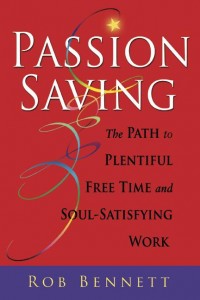
Continuing to post honestly is 100 percent consistent with the plan. The entire point of the Passion Saving concept was to permit people to do things like that. I am a great example of why effective saving can pay off big time in the long run.
I hope that helps a bit.
Rob
Rob, I just backtested your portfolio if you had simply put $400K into the S&P 500 in 2002. I assumed that you just left it alone. No funds added, no shares sold. Despite the 2000s being a sort of “lost decade” for stocks your CAGR would have been 8.14% and as of today you’d have a balance of $2,207,652. You could have continued working and only added a minimal amount, perhaps enough to get the company match, and coasted to retirement. You had saved enough by then to have rested on your laurels and focus on other priorities (such as your kids’ education, family vacations to places like Disney World, and other worthwhile things). The problem is that you retired too soon. See the link below:
https://www.portfoliovisualizer.com/backtest-portfolio?s=y&sl=2HigHdr1EArnOzBaiaUUcK
The priorities that you mentioned are all good ones. But you failed to mention the most important one of all — protecting the people of the United States from having to endure the effects of the next Buy-and-Hold Crisis.
Rob